Hangry September 7, 2020 Cooking for 2

When I was younger, I lived by myself, then got a cat. Actually, I had several room-mates in between, until I realized that when the roommate’s boyfriend called in sick, and stayed at our place, that he actually lived there. The two of them would get married or engaged, or move out together, but anyway, it would be back to cooking for one for a while again.

Then I met a dashing young man. I was wearing a button that asked, “Is there lust after feminism?” and we discussed that for a while. He told me he had grown up collating and stapling feminist propaganda, and I asked, “What’s your last name again?” and upon hearing the answer I said, “Oh, you’re June’s boy!” and I scooped him right up.

Then cooking for two for seven years, then finally a third. Happy Baby Food Grinder came in very handy. Then cooking for four: June moved to our house before her condo was ready. An affluent 60s baby and a depression baby took turns putting a heel of bread in the bottom of the bag into the garbage (me) and fishing it out again (her): “There’s still some freshness in it!”

Condo ready, June moved out, and our kid’s “renovicted” girlfriend moved in, cooking for four again. I served supper buffet-style, so the sullen young people could sullenly serve themselves and sullenly eat in kid’s bedroom.

Kid and his girlfriend move out, cooking for two. June is finding it too much to live on her own in the condo, moves in with us permanently. Cooking for three. Steak cut in thin strips, nothing too spicy, coffee strong and black. She managed her own breakfast, I came home for lunch (usually leftovers), the three of us around the table for supper.

June kept her healthy appetite until a week or two before she died, early last month. Cooking for two: I have way too many leftovers.

Hangry August 31, 2020 Health claims questioned

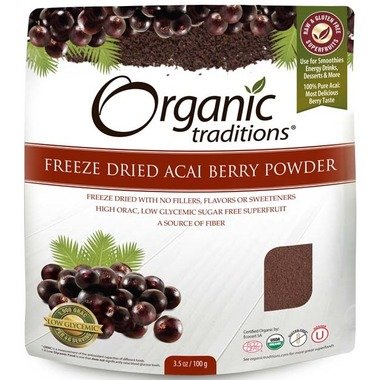
Acai berries are in the news again. Yesterday, CTV news reporter Avis Favaro told us “Canadian clinical trial looks to acai berries in hopes of preventing severe cases of COVID-19.” The health food store clerk and I discussed this as I bought my “Organic Traditions Acai Berry Powder,” in the hopes it would help me with some inflammatory issues I’m having.

Googling around, I found a fascinating study, a sociology of the acai berry, particularly the health claims on its packaging. Christine Parker et al (2019) lay it out for us.

“Acai berries originate from two types of palms that grow along the Amazon River from Bolivia to Brazil. Originally consumed largely by rural, floodplain groups called Amazonian ribeirinhos, acai became popular throughout Brazil by the early 1990s due to internal migration of these people to provincial cities. Western tourists exported the berry to Los Angeles in the later 1990s. The two most common acai products on the market are frozen smoothie packs and acai powders, which are both used in various beverages or, for the powders, in baking.  When first imported into the US, acai was a niche product described as ‘[a] cult phenomenon, popular mostly among young, male extreme-sport enthusiasts… skaters, surfers, snowboarders.’

“It became widely popular after Dr. Nicholas Perricone, a New York dermatologist and ‘anti-ageing expert,’ presented acai as a ‘superfood’ for its ‘anti-ageing properties’ in his book that was featured on the Oprah Winfrey Show in 2003 and 2004. By 2013, ‘acai-laced products grossed nearly $200 million in the United States’.”

The packaging makes largely unsubstantiated health claims, that are allowed in the US and Australian markets, but not in the EU, where authorities demand evidence. The labels also romanticize the fruit, saying it is “wild-picked,” and “grows naturally,” whereas the ribeirinhos have been carefully cultivating, weeding, and transplanting the tall palm trees (mainly for construction) for generations.

And far from being a natural, simply freeze-dried product, it needs modern technology to get from jungle to retail. “Because acai berries begin to spoil within 24 hours of being harvested, export of the berries to a broader consumer base was only made possible by advances in food processing, preservation and transportation technologies. They are 1 to 2 cm in diameter and contain a large seed that makes up about 80 to 90% of the fruit in both size and weight. The seeds are covered in a thin, oily coat, which is the edible pulp layer, and tough, fibrous outer layers. Generally, the manufacturing of acai juice entails the acai berries being soaked in (often, hot and/or chlorinated followed by potable) water, added to a rotation device that separates the seeds, pulped and sieved in a machine, mixed with citric acid, pasteurized and then frozen for and throughout transportation. The juice produced is then subject to further processing to make either smoothie or powder packs. Both products require costly and complex machinery to create the right kind of environment, texture and color.”

My food label says, “Acai berries have long been revered by indigenous cultures of the Amazon. Considered to be one of South Americas most important superfruits, they were traditionally used in the daily diet and in both ceremonial and medicinal preparations.”

Christine Parker’s team looks a little closer at the “traditional” uses of the fruit by the ribeirinhos. “The Western way of eating acai is commonly viewed within the key acai production region as disrespectful and inappropriate. According to traditional beliefs, acai has a reputation for being ‘a heavy food that weighs you down and makes you lethargic.’  Traditional beliefs in Brazil also associate the inter-mixing of acai with other vegetables and fruits with indigestion. Yet, western marketing claims that acai is a ‘natural energy boost,’ an ‘energizing superfood,’ [offering] a sustained energy boost’.”

Well, I haven’t tried my acai berry powder yet and don’t know if will be anti-inflammatory or energizing. Now I wonder if it will make me lethargic and give me indigestion. I also bought blueberries, and I have been eating them.

References

Favaro, A. (2020.) “Canadian clinical trial looks to acai berries in hopes of preventing severe cases of COVID-19.” From https://www.ctvnews.ca/health/coronavirus/canadian-clinical-trial-looks-to-acai-berries-in-hopes-of-preventing-severe-cases-of-covid-19-1.5085568

Parker, C. et al (2019.) “Consumer Power to Change the Food System: A Critical Reading of Food Labels as Governance Spaces: The Case of Acai Berry Superfoods.” From https://heinonline.org/HOL/Page?collection=journals&handle=hein.journals/jfool15&type=Text&id=31

A handful of studies that really like acai’s possibilities:

“Role of antioxidants in food.” From https://www.researchgate.net/profile/Neeraj_Gupta7/publication/339318489_Role_of_antioxidants_in_food/links/5e7f53b2458515efa0b215ac/Role-of-antioxidants-in-food.pdf

“An Anthocyanin-Rich Mixed-Berry Intervention May Improve Insulin Sensitivity in a Randomized Trial of Overweight and Obese Adults.” From https://www.ncbi.nlm.nih.gov/pmc/articles/PMC6950395/

“The value of the Brazilian açai fruit as a therapeutic nutrition strategy for chronic kidney disease patients.” From https://pubmed.ncbi.nlm.nih.gov/29915880/

Hangry August 23, 2020 Extremely tiny livestock

In about grade five or six, my son’s class raised mealworms to the beetle stage. They held Field-Day-style races and learned how to feed and care for these very tiny livestock. According to Cindy Quarters, “They will eat oatmeal, cornmeal and other grains crushed into meal such as wheat and milo. In the wild, they eat fungus, seeds and decaying plants, but captive mealworms often eat dog or cat food, old cereal, chicken food, birdseed, flour, fruits and vegetables.”

She explains, “Mealworms are often raised as pet food for lizards, fish and birds. Many fisherman also admire these little wigglers for their lasting power when dangled in the water on the end of a hook. It’s not unusual for people to raise their own mealworms for these reasons, and sometimes it’s only then that people realize that a mealworm isn’t the final stage of an insect, it’s just one stage of a darkling beetle’s development.”

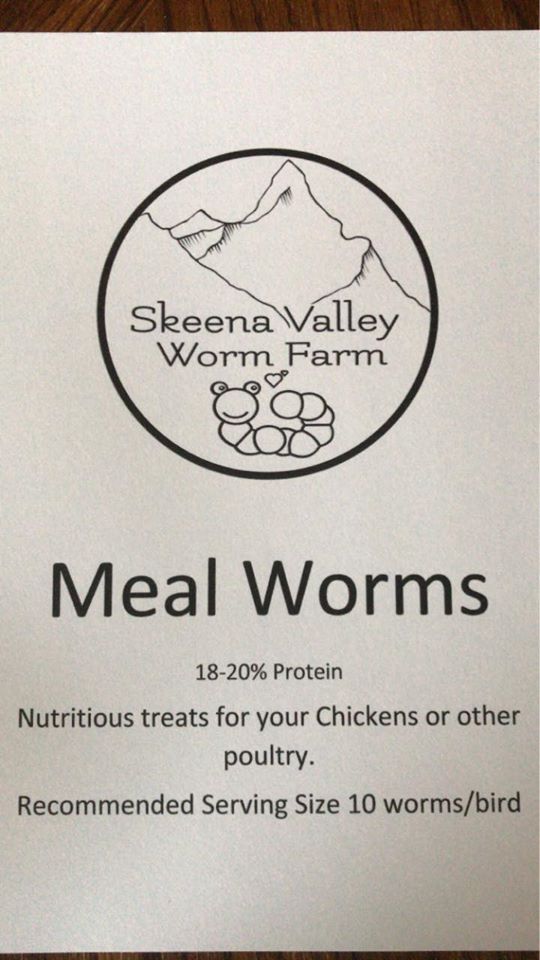
I was pleasantly surprised to learn that we can get mealworms, in bulk, right here in River City. Right here! Skeena Valley Worm Farm recommends a serving size of 10 worms per chicken or other poultry bird, with the worms having a protein content of 18-20 per cent. Skeena Valley Worm Farm advises about their other products, “Red Wigglers are particularly good for your compost or home compost system. If you want worms for your garden, you would want dew worms or european nightcrawlers.”

Skeena Valley Worm Farm posts useful, informative articles on these helpful worms, such as this one on vermicomposting; “Vermicomposting, or worm composting, turns kitchen scraps and other green waste into a rich, dark soil that smells like earth and feels like magic. Made of almost pure worm castings, it’s a sort of super compost. Not only is it rich in nutrients but it’s also loaded with the microorganisms that create and maintain healthy soil. Clemson University Extension lists the following benefits of vermicompost in their article on worm composting:

  • provides nutrients to the soil
  • increases the soil’s ability to hold nutrients in a plant-available form
  • improves the soil structure
  • improves the aeration and internal drainage of heavy clay soils
  • increases the water holding ability of sandy soils
  • provides numerous beneficial bacteria.”

Imagine eating fresh-picked radishes and carrots grown in this wonderful nutritious soil! Your microbiome would moan in pleasure.

When I worked at a community centre, we had the day campers create ready-to-use vermicomposting bins, with worms, some soil, and kitchen scraps, and decorated by kids’ drawings of worms. They were displayed at the Farmers Market, were priced at $20 each, and were kind of heavy and bulky, so they didn’t sell like hot-cakes. It was heartening to see the children expertly explain how they worked, so it was fun and educational.

One magical day at the centre, the community gardeners told the children they could pick and eat as many peas as they liked. It was hot and sunny, about 3:30 pm, and we sat in the shade near the worm bins to snack. We fed the shells to the worms, with the littlest children, aged 5 – 8, begging to hold a worm. I would carefully fish one out and put it into their small, cupped hands: “Now be very gentle,” I said and they nodded reverently.

Then the parents started to show up in cars or with buggies and bikes, to take the children home. But for about 20 minutes one hot afternoon, I felt like the Catcher in the Rye, and all was well with the world.

References

Clemson Cooperative Extension. (2009.) “Worm Composting.” From https://hgic.clemson.edu/factsheet/worm-composting/

Planet Natural on Vermicomposting. (nd.) “Using Worms Add a whole new subculture to composting by enlisting worms — usually red wigglers — to do your dirty work.” From https://www.planetnatural.com/composting-101/indoor-composting/vermicomposting/?fbclid=IwAR0kscu4kjp4hPxJHZXMGgXIqoCW9yjnVxcW-6rVYTMp0b7J0RD0peLmeXM#.XuoY4ER5UGE.facebook

Quarters, C.  (nd.) “Facts on Mealworms for Kids.” From https://animals.mom.me/mealworms-kids-8636.html

Skeena Valley Worm Farm (nd.). From https://www.facebook.com/114880550265028/photos/a.114940000259083/146071457145937/?type=3&theater

Hangry August 17, 2020 Nutrient-dense, humanely-raised

Regenerative Agriculture has been in the news a lot lately. “The World Food Prize winner says soil should have rights. Soil scientist Dr. Rattan Lal digs deep into the power of soil to sequester carbon, mitigate climate change, and the need for a Clean Soil Act,” by Virginia Gewin, July 16, 2020.

“ ‘Biggest Little Farm’ director on farming with nature, not against it,” by Natasha Pinon, July 31, 2020. “If you’ve been dreaming about moving out to the open range and starting a farm in harmony with nature, someone already beat you to it. Enter Molly and John Chester, the couple behind the Biggest Little Farm, a Hulu documentary that chronicles how they brought new life to a dead farm using regenerative agriculture techniques. When snails swarmed their orchards, they brought in ducks, whose poop was creating toxic algae blooms in a pond on the property, to eat the snails. When crops attracted gophers, who were then killing trees, they brought in owls, who then ate gophers. (Their poop reinvigorated the trees, too.) Everything was meant to be cyclical.”

The processes include planting native trees in pasturelands, avoiding soil erosion with aquifers, planting cover crops, and avoiding tilling.

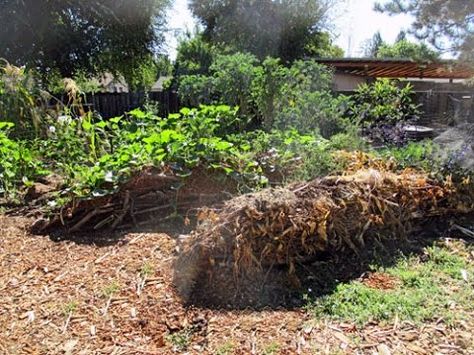
I was lucky enough to work with Agatha Jędrzejczyk, Community Food Action Developer at Kalum Community School Society. Her society rented an office at the Community Centre where I worked, and in the adjacent community garden, she taught me Lasagna Gardening. Do not dig up anything. Start with a few layers of thick cardboard (broken-down boxes work well) and water it. This attracts worms and cuts off sun and air to weeds. Colleen Vanderlinen in “How to Make a Lasagna Garden” continues: “Alternate layers of “brown materials,” such as dry leaves, shredded newspaper, peat, and pine needles, with layers of “green materials,” such as vegetable scraps, garden trimmings, and grass clippings. Your “brown” layers should be roughly twice as deep as your “green” layers, though absolute precision is not that important. The result of your layering process should be a 2-foot-tall bed, which will shrink down in just a few weeks.”

Agatha and I had some very enjoyable Monday mornings, racing the city truck to grab bags of grass clippings. (City truck always won, but my highlight of those race days was Agatha’s cartoon-like reaction when she poked her head into a compost bag that was filled to the brim with dog doo-doo.) I don’t steal compostables for the benefit of the community anymore, but I use Lasagna Gardening at home and spend just a few minutes each season weeding.

I was on the board of the Greater Terrace Food Association for a while, and got to know about the Rauschenbergers, a local farming couple. “In this lecture, Carolanne Rauschenberger will talk about Permaculture which is a type of sustainable agriculture which emphasizes the harmonious interrelationship of humans, plants, animals and the Earth. She will also talk about Hugelkultur (HOO-gul-culture) which is a gardening and farming technique whereby one creates mounded garden beds with biomass such as logs, leaves, compost and soil.” Inspiration Green and Permaculture magazine continues, “Simply mound logs, branches, leaves, grass clippings, straw, cardboard, petroleum-free newspaper, manure, compost or whatever other biomass you have available, top with soil and plant your veggies.

“The advantages of a hugel bed are many, including: the gradual decay of wood is a consistent source of long-term nutrients for the plants and generates heat which should extend the growing season. Soil aeration increases as those branches and logs break down, meaning the bed will be no till, long term. The logs and branches act like a sponge. Rainwater is stored and then released during drier times. Sequester carbon into the soil.”

We also have Young Agrarians in town. “In the fertile soils of the Skeena River Valley, Farmer Cam grows vegetables at Hidden Acres Farm and Treehouse Resort. Established in 2019, Farmer Cam’s Foods (FCF) produces nutritious microgreens, fresh greens and salad mix, and flavourful herbs, roots, and fruiting crops.”

My last segment of my new (now cancelled) community TV show, “Char Can Cook Keto,” was taped just before the pandemic hit. “Interested in local food systems and security? You’re invited to an afternoon of connecting with local farmers, food producers at the second annual Skeena-Bulkley Valley Meet and Greet, March 7, 2020.

“Join Vicky and Chris of Thimbleberry Farm for an afternoon of networking and idea-sharing. Make new connections and strengthen old ones among the region’s agricultural community members.”

From their website: “Established in 2016, owners and operators Vicky and Chris manage a market garden, pastured poultry, layer flock, and meat rabbits. As a no-till, no-pesticide/herbicide farm, Vicky and Chris integrate the farm’s different operations to create a healthy and diverse agro-ecosystem that produces nutritious, ethically grown food for their community. Growing over 25 varieties of colourful, nutrient-dense and delicious vegetables. High quality, humanely-raised pastured poultry and rabbit meat, as well as eggs and artisan bread.”

I can vouch for the artisan bread. Although Vicky told me it is not a true sourdough (she does use a small amount of yeast), because of its long rise (8 hours? 18? I don’t recall) I can digest it with no tummy troubles.

The Skeena Valley was once known as “The Okanagan of the North,” producing a wide variety of fruits and veg that were shipped south and east by train. Then, the farmers became loggers, foresters, or sawmill employees, as the burgeoning industry grew.

I’m glad to see Regenerative Agriculture, with improved soil improving the nutrients in the food, is not far away, long ago, or in the future. It is here and it is now.

References

Farmer Cam. (n.d.) From  https://www.farmercamsfoods.ca

Gewin, V.  (2020.) “The World Food Prize Winner Says Soil Should Have Rights.” From https://civileats.com/2020/07/15/the-world-food-prize-winner-says-soil-should-have-rights/?fbclid=IwAR3tlRlbiQh4L4GkTIVizTE3Un9uq3JcIZVBnNdEdEJJGafn6uNxIsYK-j0

Inspiration Green and Permaculture magazine. (2013.) “The Many Benefits of Hugelkultur.” From https://www.permaculture.co.uk/articles/many-benefits-hugelkultur

Pinon, N. (2020.) “ ‘Biggest Little Farm’ director on farming with nature, not against it.” From From https://mashable.com/article/what-is-regenerative-agriculture/

Heritage Park Museum.  (2016.) “The Permaculture Experience — developing hugelkultur.” From http://heritageparkmuseum.com/event/gardens-green-spaces-growing-squash-in-the-north/

Thimbleberry Farm. (n.d.)  From https://www.thimbleberryfarm.org

Vanderlinden, C. (2020.) “How to make a lasagna garden.” From https://www.thespruce.com/how-to-make-a-lasagna-garden-2539877

Young Agrarians. (2020.) “Skeena-Bulkley farmers meet & greet with Thimbleberry farm.” From https://youngagrarians.org/skeena-bulkley-farmers-meet/
Obituary (Susanna) June Menzies

May 5, 1925 – August 10, 2020

June was born in Arcola, Saskatchewan and her family Hi (Harold) and Bill (Bertha) Green and their six children moved to Prince Albert, Saskatchewan. Later, the Member of Parliament (John Diefenbaker) encouraged Hi to move to Saskatoon so his children could attend good high schools and the University. Immediately after high school, against her father’s wishes, June enlisted in the Armed Forces. She went to Japanese language school in Vancouver, and worked as an intelligence officer in Fort Richie, Maryland. After the war, she met her husband Merrill Menzies at University who was also studying economics.

They lived in Canada and in London, where Merrill was taking his PhD in Economics. They had three children: Rebecca, David and Liana. 

June worked as a volunteer chair of the Manitoba Action Committee on the Status of Women, changing laws to increase equality and civil rights, and had a lengthy career as a senior civil servant in Ottawa, including Chair of the Anti-inflation Board (1976) and Chair of the National Farm Products Marketing Council for 13 years. She was named to the Order of Canada in 1980.

After retirement, June and Merrill settled in Winnipeg, where she continued to do social justice work with homeless and AIDS sufferers. She moved to Maple Estates in Terrace in 2010, where she enjoyed the neighbours, walking, going to church, library book club, women’s centre, the pool, the Sportsplex, and every play, concert or debate at REM Lee theatre. Slowing down a bit at age 91, she moved in with Dave and his wife Charlynn Toews, where she enjoyed sitting in the sun, watching Turner Classic Movies, going to Tai Chi, and outings with friends.

She has two grandchildren, Mackenzie MacLeod (Rebecca) and Cameron Toews Menzies (Dave).

In lieu of flowers, please donate to REM Lee Theatre.

Hangry August 3, 2020 Protein and pressure sores

My 95-year-old mother-in-law lives with us, and was very independent until March. Then she started weakening, having trouble getting up from a chair and walking, started speaking word salad. Just in the past few weeks, she is sleeping all night and all day, with very little speech and eating less and less.

We got her a chair lift to gently raise her up, but after only a few capsules of CBD, she could stand again. I’m afraid that very hard plastic lifter, plus her increasing immobility, gave her pressure sores.

A week ago, her dentures became too loose to use, and the sole denturist in town isn’t available until August 11.

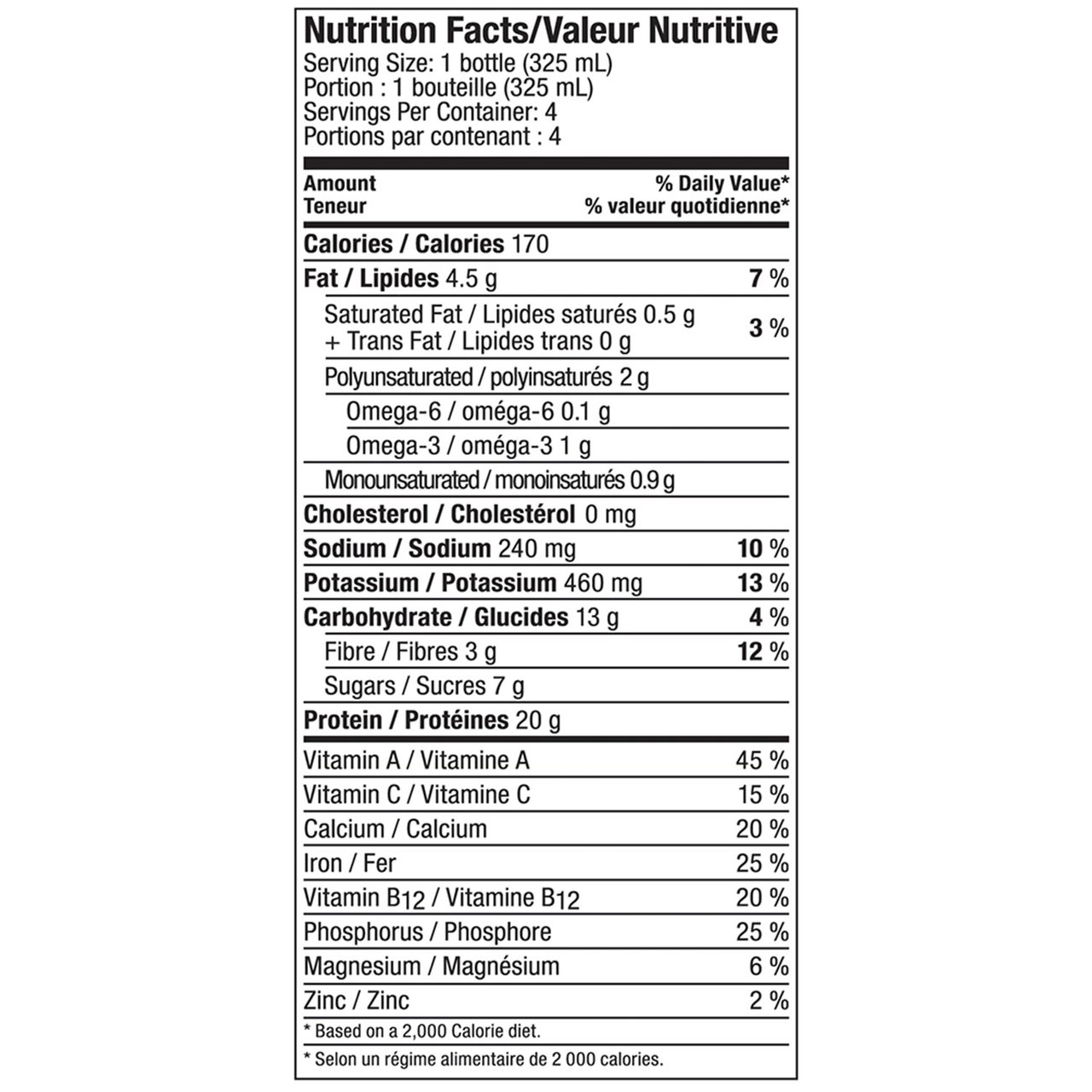
When I contacted public health about the pressure sores, they said “Boost! Ensure! She needs protein to help heal those sores.” Yikes, all that sugar and she is diabetic. She didn’t like the artificial sweeteners taste, grimaced after each sip. I figured, it is more important to get the protein in than keep the sugar out. I got Ensure “High protein,” 12 grams. Then I started looking around and saw Vega protein, 20 grams – that’s more like it! We’ll try that tonight.

Then I started reading about geriatric nutrition, “Correlation of Pressure Sores and Nutritional Status,” by Gayle D. Pinchcofsky et al, who confirm “One major problem is that of protein calorie malnutrition; another is the susceptibility of this [elderly] population to pressure sores.”

Another study, “Effects of enteral nutrition on patients with pressure lesions,” says, “Protein-energetic malnutrition (PEM) affects prognosis and mortality in elderly patients as an inadequate nutritional status is a risk factor for the development and worsening of pressure sores.”

Ok, so it is important to get that protein in, but exclaiming “Wake up! Take another sip!” for every single sip is not a relaxing mealtime atmosphere.

But there is another view of geriatric nutrition that seems more humane and respectful. “Nutrition Support at the End of Life: A Critical Decision,” says, “A comprehensive study of nursing home patients with dementia reported that the insertion of feeding tubes did not improve survival over those hand fed, did not lower the risk of aspiration pneumonia, and did not improve pressure ulcer healing, weight status, comfort, or functional status.”

This article tackles it head-on. In “Food – The four letter word in end of life care,” explains, “What a patient can eat and drink will become less. Eventually both eating and drinking will become zero. Stopping eating and drinking is natural to the dying process.” And, oh boy, “The atmosphere around eating is more important that what is ingested.” And finally, “Is he dying because he’s not eating? Translation… No, he is not eating because he is dying.”

In “End of Life Nutrition,” Katie Dodd says, “Interestingly, when it comes to reduced intake at end of life, it is the caregivers who experiences the greatest amount of distress and not the dying patient. An anonymous healthcare professional was quoted as saying: ‘I have had so many experiences of relatives and professional carers distressed because their loved one/service user hasn’t eaten properly. It would be great to be able to re-assure them from the strong position of empirical evidence that their relative is not distressed.’”

I hope the Vega is tasty enough to keep her awake and keep me from exclaiming, because, yes, I am distressed.

References

Dodd, K. (2020.) “End of Life Nutrition.”

From https://www.thegeriatricdietitian.com/embracing-hospice-end-of-life-nutrition/

Fuhrman, M. (2008.) “Nutrition Support at the End of Life: A Critical Decision.” From

https://www.todaysdietitian.com/newarchives/082508p68.shtml

Murray . K et al. (2011.) “Food – The four letter word in end of life care.”  From https://www.alzheimer.mb.ca/handouts/Food%20the%20four%20letter%20word%20in%20end%20of%20life%20care.pdf

Pinchcofsky, G et al.  (1986.) “Correlation of Pressure Sores and Nutritional Status.”

From https://onlinelibrary.wiley.com/doi/abs/10.1111/j.1532-5415.1986.tb03411.x

Straccci, G. et al (2020.) “Effects of enteral nutrition on patients with

pressure lesions: a single center, pilot study.” From https://www.europeanreview.org/wp/wp-content/uploads/1563-1570.pdf

Hangry July 27, 2020 Beets cure what ails ya

On Thursday, I wrote on my list of things to do “Fix institutional food,” complete with a little square box to check.

My butcher shop has started selling locally grown produce, including fresh beets.  I bought some and dreaded peeling them – but I found a recipe that avoids peeling until after they’re roasted, when you can just pull it off with a paper towel. Delicious, earthy tasting and sweet.

But I’m low carb –- let’s look that up.

OK, good news! D. Babarykin et al tells us in The Journal of Biosciences and Medicines: “Recently, the effect of red beet on carbohydrate metabolism, in particular, the dynamics of glycemia, both in normal conditions and in diabetes, is being actively studied. According to the morphological and biochemical results obtained in the experiment in streptozotocin-diabetic rats, the extract of Beta vulgaris cicla, when administered by gavage, reduces blood glucose levels by regeneration of the pancreatic beta-cells. Consumption of soluble dietary fiber is correlated with decreased postprandial glucose and insulin responses and hence has beneficial effects on metabolic syndrome. Swiss chard (Beta vulgaris cicla) extracts exhibit hypo-glycaemic activity. In an Australian study sixteen healthy individuals were recruited to consume the test meals in a controlled single-blind cross-over design. Results revealed a significant decrease of the postprandial insulin response in the early phase (0 – 60 min) and a significantly lower glucose response in the 0 – 30 min phase (P < 0.05) after red beetroot juice consumption.” Hurray for beets!

They say, “Beets have been used in traditional medicine for hundreds of years to treat constipation, gut and joint pain, dandruff. Modern pharmacology shows that red beet extracts exhibit antihypertensive and hypoglycaemic activity as well as excellent antioxidant activity.“

That study also lauded the humble beetroot for help with all kinds of problems, looking at “antioxidant, anti-inflammatory and chemo-preventive Beta vulgaris phytochemical activity, its impact on gastrointestinal and cardiovascular system as well as endurance exercise performance. […] Fractionated red beetroot juice on the molecular mass basis is prospective for senile sarcopenia as well as senile cognitive decline and Alzheimer’s disease prevention.”

Alzheimer’s? Yup. Alzheimer’s & Dementia Weekly reports, “We can’t say that betanin stops the misfolding completely, but we can say that it reduces oxidation.[…] Less oxidation could prevent misfolding to a certain degree, perhaps even to the point that it slows the aggregation of beta-amyloid peptides, which is believed to be the ultimate cause of Alzheimer’s.” 

Being Patient.com says, “A compound found in beets that give them their distinctive red color may also hold the key to stopping the processes in the brain that lead to Alzheimer’s, according to research presented by scientists from the University of South Florida. The compound is called betanin. In tests, scientists showed that it helped suppress the misfolding of proteins called beta-amyloid, which accumulate and form into toxic plaques in the brains of Alzheimer’s patients.”

Shokouhsadat Hamedi et al say, “Beet has been used in traditional medicine for hundreds of years to treat a variety of diseases such as constipation, decreased libido, gut and joint pain and dandruff.

“This plant is known in Iranian traditional medicine (ITM) as Selgh (Arabic) or Choghondar (Farsi) and its leaves are used to develop treatments. Results confirmed that the plant referred to as Selgh in traditional books is that the plant Beta vulgaris in contemporary studies. Treatments that have not been evaluated in modern phytotherapy but do appear in traditional treatments include fever, as well as psychological and psychiatric issues.”

So by the time I get to drbeetroot.ca, I’m ready to believe their claim: “Beetroot is not just an vegetable. It is the next Super Food.  Read below the interesting benefits that you can get from Beets.

Lowering Blood Pressure / hypertension
Boosting Stamina by reducing O2 use
Anemia and low blood hemoglobin
Pregnancy support
Lowering Cholesterol
Reducing Obesity & Overweight
Fighting against Cancer
Anti-aging 
Digestive help 
Glandular fever – Epstein Barr virus
Skin
Immune system 
Inflammation
Hair
Brain function and age related neurological problems
Radiation Protection
Detoxifying the liver.”

Fix institutional food? Add beets. Check.

References

Alzheimer’s & Dementia Weekly. (2018.) “How Beets Beat Alzheimer’s.” From http://www.alzheimersweekly.com/2018/03/beet-alzheimers-with-betanin.html

Babarykin, D. et al. (2019.) “Red Beet (Beta vulgaris) Impact on Human Health.” From https://www.scirp.org/journal/paperinformation.aspx?paperid=91009

Being Patient.com (2018.) “Compound Found in Beets Might Help Prevent Alzheimer’s.” From https://www.beingpatient.com/beets-alzheimers/?fbclid=IwAR1QemzwnMI962UbqdWMQfvXYgbrP1450HgK_pY0RM_t4RXzGQQcmofz7GQ
drbeetroot.ca (N.D.) From https://drbeetroot.ca/pages/why-beets

Hamedi, S. (2018.) “Beta vulgaris – A Mini Review of Traditional Uses in Iran, Phytochemistry and Pharmacology.” From https://www.researchgate.net/publication/323661607_Beta_vulgaris_-_A_Mini_Review_of_Traditional_Uses_in_Iran_Phytochemistry_and_Pharmacology

Recipe

https://www.spendwithpennies.com/simple-roasted-beets/

Crows are Cool

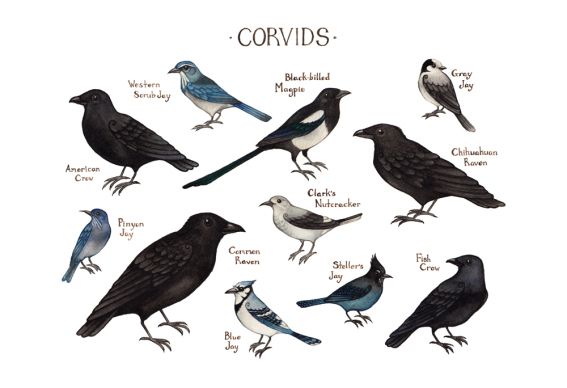
Kaeli Swift, my new best friend introduces herself (at https://corvidresearch.blog/about/): “I’m Kaeli Swift, Ph.D. Since I was a kid I’ve loved wildlife—especially birds—and asking questions about animal behavior and cognition. While an undergrad at Willamette University (2005-2009), I discovered that crows and other corvids offered the perfect marriage of these interests, and I have been hooked on them ever since.”

Here are some fun facts from her website:

“How many difference sounds can a crow make? More than most people think. The loud caws make up the bulk of their vocalizations, but they will also utter rattles, growls, coos, and other odd sounds. They are also decent mimics, and can learn to imitate the vocalizations of other animals (including people).”

I have heard my backyard baby crows quietly say “hup, wup,” when alone. “Do crows ever talk to themselves? Meaning, make sounds not intended for the ears of other crows? Young crows will “babble” quietly to themselves.”

My backyard crows migrate. “While common ravens are residents wherever they are found, American crows are what’s called a “partially migratory species” because some populations migrate while others do not.  Most notably, the northern populations of crows that occupy central Canada during the summer breeding season, travel south to the interior United States once the snow-pack precludes typical feeding behaviors.”

Crows are devoted to their families. “ Although trios of ravens are not uncommon, and there have been observations of young from previous years remaining at the nest, ravens are not considered cooperative breeders. Crows are considered cooperative breeders across their entire range.  If helpers are present they typically have between 1-3. So if a nest is very busy with more than two birds contributing to nest construction, feeding nestlings, or nest defense, it’s more than likely a crow’s nest, not a raven’s.”

Crows eat bugs. “Although both species consume a host of invertebrates, crows consume a larger proportion of inverts and garbage relative to ravens.  Mammals, especially from carrion, meanwhile make up the largest proportion of a raven’s diet across surveyed populations.  Access to refuse and population location, however, can dramatically shift the dietary preferences of both these omnivores.”

Early this spring, I saw a small group of adult crows harassing a hawk, “Get outta here!” “In places where they do overlap, interactions between the two are often antagonistic, with crows acting as the primary aggressors in conflicts.  Ravens will depredate crow nests if given the chance.”

And here’s five reasons to like crows: “Crows belong to the smartest bird family on the planet, Corvids! They are fun, interesting and intelligent. Sometimes they bring gifts to people that have befriended them and they never forget a face, a good or bad one! Lots of people love them but many hate them too. It’s thought they destroy corn crops and spread West Nile virus but actually, this isn’t true.  Crows are misunderstood birds that need some love!” See the ten-minute video at https://www.youtube.com/watch?v=jPTtowjXBVM.

But don’t crows eat other birds’ eggs and young? Yes, but so do a lot of other animals.

This is from https://www.discoverwildlife.com/how-to/identify-wildlife/how-to-identify-egg-thieves/

“MEET THE PREDATORS

Pine martens and polecats generally carry eggs off to eat elsewhere. They characteristically bite across the egg, leaving an oblong or rectangular hole through which they lick up the contents. Small canine tooth punctures may be left in the eggshell. Stoats and weasels, being smaller, eat larger eggs in the nest. They bite a hole in one or both ends of the egg.

Foxes generally carry eggs away from nests. They may then eat them or they will cache (bury) them for consumption later. The whole egg is taken in the mouth, crushed and the contents eaten. Eggshells are left some distance from the nest.

A fox will often catch mallards, pheasants and partridges on their nests. If this has happened, the nest will be damaged, with scattered feathers if the carcass has been carried away or the remains of the carcass if it has been eaten nearby.

Rats prefer the large, cryptic eggs of colonial nesting birds and consume the eggs in the nest. They make a hole in the side or end of the egg with characteristic chip marks, then lick out the contents. Squirrel signs are very similar.”

Hangry July 18, 2020 An apple a day

My mom would have turned 87 yesterday, she died in late summer last year. I cooked for her whenever I was in Manitoba to visit. I didn’t like the food she got in the Assisted Living place, but my sister often had her over for supper so she got good meals there.

My mom’s dad died before I was born, of a perforated ulcer. I wondered if his diet had helped or hurt him.

We now know that ulcers can be caused by “corkscrew-shaped bacterium called Helicobacter pylori, or H. pylori for short,” which Barry Marshall helped discover in the early 80s. But until then, it was thought diet and stress contributed to it.

Was he stressed? Raising a large family on a small farm nine miles out of Plum Coulee, Manitoba in the 1930s: probably.  When my mom was nine the family moved to the larger town of Steinbach where he painted houses for a living. They had a sturdy house and a large garden.

Diet: in “Role of dietary polyphenols in the management of peptic ulcer,” Mohammad Hosein Farzaei et all tell us what to eat. “Dietary consumption of a significant amount of “natural” protective supplements in early life leads to prevention or delayed peptic ulcer. […] Apples (Malus spp., Rosaceae) represent an excellent source of polyphenols.”

Nope, no apple a day for him. When I was growing up in Steinbach, there was one kind of apple, the Mcintosh. Every fall my family would buy a big box and store them in the garage. They were BC apples and some group organized the sale as a fundraiser, I think the Kinsmen. And when they were gone, no more apples til next fall.

Next, curcumin. “It has been characterized that curcumin is a strong antioxidant and anti-inflammatory substance.” Not a chance grandma was cooking with this in Plum Coulee or Steinbach.

“Gallic acid is naturally found in various vegetables and fruits, such as gallnuts, Tragopogon species, sumach, grapes, pineapple, Phyllanthus spp., and zinger.” I don’t know what most of these are, but I recall grapes only occasionally and never pineapple. “The grape, a fruiting berry of the woody vines (Vitis spp.) from the family Vitaceae, is an essential source of nutritional phytochemicals such as flavonoids and anthocyanins.” I rarely had these growing up; he probably did not eat grapes at all.

“Green tea polyphenols.” No. My peeps immigrated to Manitoba from Prussia in 1874, where they may have had a wild tea tradition, but I don’t think it translated to the prairies of Canada.

“Pomegranate polyphenols and ellagic acid.” No. I discovered pomegranates as an adult. I don’t think my parents ever ate them.

“Quercetin is a flavone present in a wide variety of fruits and vegetables, and is the major flavonoid in the human diet.” Google tells me “Foods that commonly contain quercetin include onions, apples, grapes, berries, broccoli, citrus fruits, cherries, green tea, coffee, red wine, and capers.”

These were not available or commonly used or grown locally. In fact, as a habit from the depression, grandma didn’t drink coffee; she drank Postum, a powdered roasted-grain beverage. I ate wild berries in season: saskatoons and the most wonderfully flavourful tiny red strawberries.

“Resveratrol ,  a natural phytoalexin from the stilbenes subgroup, is isolated from berries, grape skin, and peanuts.” Growing up, all us kids got a tüte, a small paper bag with two Mandarin oranges and a handful of peanuts in the shell, Christmas Eve in church. Although we had peanuts at home, and oranges (but Mandarins were only available in stores around Christmas time), it still felt like a special treat.

“Peptic ulcer disease has been a major threat to human health over the past two centuries. Despite medical advances, the management of peptic ulcer and its relevant complications remains a medical challenge, due to its high morbidity and mortality. Therefore, there is a growing interest in dietary factors as supplements for the prevention or remission of gastritis and gastrointestinal ulcers.”

I have a memory – it must’ve been a dream  – of Grandpa Harder coming to our house, and lifting me up with his long, strong arms.

References

Farzaei. M. (2015.) ”Role of dietary polyphenols in the management of peptic ulcer.” From https://www.ncbi.nlm.nih.gov/pmc/articles/PMC4458761/

Marshall, B. et al (2008.) “Helicobacter pylori: A Nobel pursuit?” From https://www.ncbi.nlm.nih.gov/pmc/articles/PMC2661189/

Watts, S. (2020.) “He Poisoned Himself to Find a Cure for Stomach Ulcers — And Won a Nobel Prize.” From https://leapsmag.com/he-poisoned-himself-to-find-a-cure-for-stomach-ulcers-and-won-a-nobel-prize/?fbclid=IwAR1gBuG5gAB02tcOa2Hc7c8EsVshjY4D_oAKtau4QClqPk4ekWNeBnLwIDo

Hangry July 13, 2020 Already known: Diabetes increases the risk of developing dementia

I joined a Dementia Caregiver support group on Facebook. My 95-year-old mother-in-law lives with us and sometimes exhibits word salad, has trouble getting up from a chair (dehydration! Water cures it) and other stressors. It’s a great group, very friendly and helpful and a good place to rant and vent.

A few days a go, I saw this: “At just 67 my Mom has been diagnosed with dementia due to diabetes.”

Wait, what? That’s a thing?

Oh, yes. There are hundreds of studies linking the two. For example, “Diabetes mellitus and risks of cognitive impairment and dementia: A systematic review and meta-analysis of 144 prospective studies.” And “Potential impact of diabetes prevention on mortality and future burden of dementia and disability: a modelling study,” says, quite clearly, “What is already known about this subject? Diabetes increases the risk of developing dementia.”

Already known! Already known!

I am livid. We are surrounded by ultra-processed foods with high fructose corn syrup and seed oils, seniors’ teas with cakes and cookies, hospital breakfasts of muffin, margarine and jam.

And official Food Guides and some dieticians still singing the sad wrong bad song of low-fat and “healthy whole grains.”

The modeling study found: “If the relative prevalence of diabetes increases 49% by 2060, expected additional deaths would be approximately 255,000, with 85,900 cumulative additional cases of dementia and 104,900 additional cases of disability. With a smaller relative increase in diabetes prevalence (7% increase by 2060), we estimated 222,200 fewer deaths, and 93,300 fewer additional cases of dementia and disability, respectively, than the baseline case of a 26% increase in diabetes.” Let’s reduce/reverse T2 Diabetes, or we are doomed.

A glimmer of hope? “New U.S. dietary guideline recommendations take aim at sugar for children and adults,” from July 11, 2020. You have to read to the very end to see this: “The beverages and added sugar subcommittee was unable to get to three out of five assigned topics. For added sugars, only one of five questions were addressed, leaving out questions such as the relationship between added sugar consumption and risk of Type 2 diabetes, or the relationship between added sugar consumption during pregnancy and gestational weight gain.” Nope.

Maybe instead of a “heart healthy” sticker we could use a Dementia Warning sticker.

References

Bandosz, P. et al. (2019.) “Potential impact of diabetes prevention on mortality and future burden of dementia and disability: a modelling study.” From https://link.springer.com/article/10.1007/s00125-019-05015-4

Reiley, L. (2020.) “New U.S. dietary guideline recommendations take aim at sugar for children and adults.”

From https://www.washingtonpost.com/business/2020/07/11/sugar-2020-dietaryguidelines/?fbclid=IwAR1g2xY2OAar9NdFYm8XRlYpOj13_0hqiNo2Epp6uM7xmOGBF8wg-1aX87I

Xue, M., et al.(2019.) “Diabetes mellitus and risks of cognitive impairment and dementia: A systematic review and meta-analysis of 144 prospective studies.” From https://www.sciencedirect.com/science/article/pii/S1568163719300157

Edit: Reversal of diabetes can be a safe option for all

From https://www.dietdoctor.com/coming-soon-groundbreaking-conference-on-type-2-diabetes?fbclid=IwAR20PfCA7OG0ekbFh27XmChmM8pPXR0qbUEXy_GlS8mTqJBOMimqdK2v4gQ

Design a site like this with WordPress.com
Get started