http://www.comby.org/documents/documents_in_english/stefansson-diet-adventures.htm

Adventures in Diet
by Arctic Explorer Vilhjalmur Stefansson
initially published by Harper's Monthly Magazine, November 1935.

Some excerpts:

In any case, skin chewing is mainly by the women, and it is not easy to bring under the conditions of modern scientific thought the idea that the wife's chewing preserves her husband's teeth.

[...]
My mother, who as born on the north coast of Iceland, remembered from the middle of the nineteenth century a period when bread still was as rare as caviar is in New York to-day - she tasted bread only three or four times a year and then only small pieces when she went with her mother visiting. So far as bread existed at her own house, it was used as a treat for visiting children.

[...]
In 1906 I went to the Arctic with the food tastes and beliefs of the average American. By 1918, after eleven years living as an Eskimo among Eskimos, I had learned things which caused me to shed most of those beliefs. Ten years later I began to realize that what I had learned was going to influence decisively the sciences of medicine and dietetics.
However, what finally impressed the scientists and converted many during the last two or three years, was a series of confirmatory experiments upon myself and a colleague performed at Bellevue Hospital, New York City, under the supervision of a committee representing several universities and other organizations.

[...]
But since fats, sugars, and starches are in most practical respects dietetically equivalent, you eat more of any one of them on a mixed diet if you decrease the combined amount of the other two.

[...]
Gradually commerce developed, breads and pastries began to be used, jams and jellies were imported or manufactured, and with the advance of starches and sugars, the use of fat decreased.

[...]
We divided up the caribou Eskimo style, so the dogs got organs andentrails, hams, shoulders, and tenderloin, while the invalids, and wehunters got heads, briskets, ribs, pelvis and the marrow from the bones.

On this diet all [scurvy] pain disappeared from every joint within four days and the gloom was replaced by optimism.

[...]
Closing the subject of vitamins in relation to long expeditions, we had better emphasize that there has recently been such progress in theextraction, concentration and storage of Vitamin C that it is now possible to carry with you enough to last several years and of such quality that it will not deteriorate to the point of uselessness. But why carry coals to Newcastle? If you are in the tropics, pick a fruit, or eat a green; if you are at sea, throw a line outboard and catch a fish; if you are in the Antarctic, use seals and penguins; if in the Arctic, hunt polar bears, and seals, caribou and the rest of the
numerous game. True enough, if you make a journey inland into the Antarctic Continent or toward the center of Greenland, where there is no game because the land is permanently snow-covered, you have to carry food with you. In that case you might as well take lemon juice. It is one of the most portable sources and they know now how to make and pack it so that its qualities as well as quantities will last you.

[...]
None of the people whose blood went into the Icelandic stock are
racially immune to tooth decay, nor are the modern Icelanders. Then why were the Icelanders of the Middle Ages immune?

An analysis of the various factors make it pretty clear that their food protected the teeth of the medieval Icelanders. The chief elements were fish, mutton, milk and milk products. There was a certain amount of beef and there may have been a little horse flesh, particularly in the earliest period of the graveyard. Cereals were little important and might be used for beer rather than porridge. Bread was negligible and so were all other elements from the vegetable kingdom, native or imported.

[...]
The broadest conclusion to be drawn from our comfort, enjoyment, andlong-range well-being on meat is that the human body is a sounder and more competent job than we give it credit for. Apparently you can eat healthy on meat without vegetables, on vegetables without meat, or on a mixed diet.

------

Fascinating!
Hangry March 1, 2020 Food first for depression?
1. Women’s rage is often medicalized.
A fascinating study by Siri Rebecca Hoogen for her master’s thesis (2006) uses a narrative structure to tell the story of four women responding to a flyer inviting women to talk about their use of anti-depressants.
The women had all been told about (and believed) the story about there being an imbalance in the chemicals in their brains, and that a prescription could fix it.
Hoogan writes, “I wanted to know what role this medicalized narrative would take when women spun their own stories of depression. I worried that acceptance of this culturally powerful narrative of medicalization would overwhelm the threads of disempowerment in their lives, and that women might neglect to recognize these threads as part of their stories—and, consequently, might neglect to see their own disempowerment as an issue to be considered in the context of depression, too.”
Long, winding tales show us lives of fraught relationships (their parents, their husbands and ex-husbands, their adult children or three-year-old), sexual abuse (age four) and sexual assault (age 15), social anxiety, perfectionism and anger.
“This correction of flawed brain chemistry is perhaps not empowering as it is enabling. It allows the person to continue living with the status quo by helping her to not feel emotional about events she would otherwise consider upsetting. In doing so, it promotes the depressive state of one narrative (“silenced” emotions) as its own “cured” state. […. Their rage was one of the] symptoms of a disease that needed “curing” (to be silenced). Indeed, the silencing of anger especially was a recurrent theme in the women’s narratives.”
2. Inflammation is linked to depression, and can be caused by inflammatory foods.
My new hero, Dr. Georgia Ede, writes, “We tend to think of psychiatric problems as “chemical imbalances” in neurotransmitters like serotonin and dopamine, and most psychiatric medications are designed to try to bring these brain signalling molecules back into balance.
“But what if we targeted inflammation instead? It is now well-established that inflammation plays a significant role in psychiatric disorders.
“As a psychiatrist passionate about the connection between food and brain health, I believe that the most powerful way to correct chemical imbalances in the brain is through food—because that’s where brain chemicals come from.”
“Which foods are most likely to set your brain on fire? The two most powerful promotors of inflammation in our modern diet are refined carbohydrates and refined vegetable oils.”
[…]
Refined carbohydrates include all processed sugars and starches—sugar, corn syrup, fruit juice, flour, and most breakfast cereals are just a few of the foods in this category. […]Refined carbohydrates cause unnaturally high spikes in blood sugar, which are powerful promoters of oxidation and inflammation. When cells are flooded with too much sugar (glucose) all at once, the chemical pathways they use to process glucose become overloaded, causing free radical by-products to spill out into the surrounding area. Free radicals are like little bulls in a china shop, bumping into neighboring structures and DNA, damaging cells from the inside out (“oxidation”). Cytokines like IL-6 and TNF-alpha are then called to the scene as first responders (“inflammation”).”
“[…]
“Vegetable” oils are oils extracted from seeds–these include soybean oil, sunflower oil, canola oil, corn oil, and many, many others. We were taught that these oils were healthy for us because they are cholesterol-free, low in saturated fat and come from plants, but the truth is that they do not exist in nature, require industrial methods and often chemical solvents to extract, and are loaded with omega-6 fatty acids. Omega-6 fatty acids promote inflammation and fight against the precious omega-3 fatty acids our brains need to develop properly and function properly every day. Vegetable oils are found in nearly every processed food in the grocery store—baked goods, salad dressings, chips, snack bars, soups, sauces, fried foods, mayonnaise, etc.”
I wish Hoogen had thought to ask the women about their diets, but it is likely they relied on the Standard American Diet, as they spoke about themselves or close relatives having diabetes and arthritis, CVD and Alzheimer’s. Some of the women lived in rural areas where it was difficult to get to a grocery store. One woman struggling with poverty issues got her meds as free samples from her local doctor.
I’m having local tenderloin basted in grass-fed butter tonight for supper. I wish I could magically hand out free samples of that.
References
Ede, G. (2017.) “Cooling Brain Inflammation Naturally with Food.” From https://www.psychologytoday.com/ca/blog/diagnosis-diet/201712/cooling-brain-inflammation-naturally-food
Hoogen, S.R. (2006) “Voice of the drug: Interpreting medicalized disempowerment in women’s narratives of depression. From https://etd.ohiolink.edu/pg_10?0::NO:10:P10_ACCESSION_NUM:miami1145635265
Hangry September 23, 2019 Avocados and Fracking
“Who would want to take away your hamburgers and eliminate cows?
“Well, Pat Brown does, and pronto. A sixty-five-year-old emeritus professor of biochemistry at Stanford University, Brown is the founder and C.E.O. of Impossible Foods. By developing plant-based beef, chicken, pork, lamb, dairy, and fish, he intends to wipe out all animal agriculture and deep-sea fishing by 2035.”
At a sustainable food conference in Stockholm, Impossible Burger’s Pat Brown said, “the canonical poor farmer with his goat, or whatever, would get to keep it. But he would also get the benefits of averting catastrophic climate change and of our eliminating the biggest drain on his freshwater sources and his land—which is his neighbors raising cows.”
Later, “Pat Brown had breakfast with Solina Chau, an energetic Hong Konger who is the co-founder of Horizons Ventures. The firm, underwritten by one of Asia’s richest men, Li Ka-shing, has led two rounds of investment in Impossible. Over coffee and avocado toast at the Grand Hotel, Chau was trying to revise Brown’s plan for introducing his [Impossible] burgers into China.”
From https://www.newyorker.com/magazine/2019/09/30/can-a-burger-help-solve-climate-change
“In 2016, the expansion of agricultural frontiers accounted for 98 percent of deforestation in Mexico. While the booming production of avocado (often referred to as Mexico’s “green-gold”) has contributed to the country’s economic growth, it has also caused deforestation and degradation in central and southern Mexican forests.”
From https://blog.globalforestwatch.org/commodities/forests-falling-fast-to-make-way-for-mexican-avocado
The avocado toast is one of many ironies. The science in the New Yorker article is iffy. It states: “Meat is essentially a huge check written against the depleted funds of our environment. Agriculture consumes more freshwater than any other human activity, and nearly a third of that water is devoted to raising livestock. One-third of the world’s arable land is used to grow feed for livestock, which are responsible for 14.5 per cent of global greenhouse-gas emissions. Razing forests to graze cattle—an area larger than South America has been cleared in the past quarter century—turns a carbon sink into a carbon spigot.”
Not so fast, says the Diet Doctor website. “Is eating meat bad for the planet? Is that ground chuck on your plate the biggest cause of our escalating climate crisis? Not compared to the burning of fossil fuels for cars, planes, industry, and energy says a provocative new commentary by journalist Paul John Scott [….] Scott charges that the growing focus on reducing meat as a way to realistically address climate change is putting the attention on the wrong issues — to our collective peril. ‘The vegetarian appropriation of the climate crisis is reckless.’
He picks apart the stats: “When you stick to the knowable, direct emissions, the climate burden of cattle fall away. The EPA estimates that 9% of all direct emissions in the U.S. are due to agriculture, compared with 20% from industry, 28% from electricity and 28% from transportation. Just 3.9% are due to livestock. That’s half the CO2 attributable to concrete.”
“What about methane? He takes that apart, too, noting that natural gas leaks created in the process of fracking alone release 13 teragrams of methane a year into the atmosphere — which is double the amount released by cattle. Add to that the methane released by other man-made sources — landfills, air conditioners, agricultural rice paddies — and cows’ methane contribution pales in comparison.”
From https://www.dietdoctor.com/op-ed-climate-change-is-real-but-dont-blame-cows
Maybe he should have taken a solar sailboat instead of flying to the conference.
-30-
Hangry May 12, 2019 The Attack of the Killer Corn Oil


“Humans are originally thought to have evolved with a 1:1 ratio of omega-6:omega-3 in their diet. Over the past 100 years the consumption of omega-3 PUFAs [polyunsaturated fatty acids] has declined, alongside an increased consumption of omega-6 producing dietary fatty acid ratios of 15/16:1.” (From “The Role of Lipid Biomarkers in Major Depression” at https://www.ncbi.nlm.nih.gov/pmc/articles/PMC5371911/)
“Optimal dietary intakes of the Omega-6 : Omega-3 ratio should be around 1–4 . However, according to the nutritional changes in the Western diet, this ratio has now increased to be within the range of 10 : 1 to 20 : 1. In parallel, there are coinciding increases in the incidence of diseases involving inflammatory processes such as cardiovascular disease, obesity, IBD, rheumatoid arthritis, and cancer. Neurodegenerative and psychiatric illnesses such as AD [Alzheimer’s disease] and depression are other examples.” (From “Health Implications of High Dietary Omega-6 Polyunsaturated Fatty Acids” by E. Patterson, R. Wall, G. F. Fitzgerald, R. P. Ross…
View original post 463 more words
Hangry May 12, 2019 The Attack of the Killer Corn Oil

“Humans are originally thought to have evolved with a 1:1 ratio of omega-6:omega-3 in their diet. Over the past 100 years the consumption of omega-3 PUFAs [polyunsaturated fatty acids] has declined, alongside an increased consumption of omega-6 producing dietary fatty acid ratios of 15/16:1.” (From “The Role of Lipid Biomarkers in Major Depression” at https://www.ncbi.nlm.nih.gov/pmc/articles/PMC5371911/)
“Optimal dietary intakes of the Omega-6 : Omega-3 ratio should be around 1–4 . However, according to the nutritional changes in the Western diet, this ratio has now increased to be within the range of 10 : 1 to 20 : 1. In parallel, there are coinciding increases in the incidence of diseases involving inflammatory processes such as cardiovascular disease, obesity, IBD, rheumatoid arthritis, and cancer. Neurodegenerative and psychiatric illnesses such as AD [Alzheimer’s disease] and depression are other examples.” (From “Health Implications of High Dietary Omega-6 Polyunsaturated Fatty Acids” by E. Patterson, R. Wall, G. F. Fitzgerald, R. P. Ross, and C. Stanton at https://www.ncbi.nlm.nih.gov/pmc/articles/PMC3335257/)
“Population studies have found that low dietary intake of Omega-3 and high Omega-6:Omega-3 ratios is associated with high rates of depression, whereas populations with higher fish consumption have lower rates of postpartum depression and suicide.” (From “Serum ω-3 fatty acids are associated with variation in mood, personality and behavior in hypercholesterolemic community volunteers” at https://www.sciencedirect.com/science/article/pii/S0165178106003209)
“Deficiency of omega-3 polyunsaturated fatty acids (PUFAs) and an alteration between the ratio of omega-3 and omega-6 PUFAs may contribute to the pathogenesis of bipolar disorder and unipolar depression. Recent epidemiological studies have also demonstrated an association between the depletion of PUFAs and suicide. […] This [Omega-3] fatty acid depletion has also been found to contribute to suicidal thoughts and behavior in some cases.” (From “Polyunsaturated fatty acids and suicide risk in mood disorders: A systematic review” at https://www.ncbi.nlm.nih.gov/pubmed/27940200)
Who is in this Evil Gang, Omega-6? Safflower oil, sunflower oil, soybean oil, corn oil, and good’old cotton seed oil (aka “The Crisco Kid”). (With information from “Health Implications of High Dietary Omega-6 Polyunsaturated Fatty Acids” at https://www.ncbi.nlm.nih.gov/pmc/articles/PMC3335257/)
Who is in the Saviour group of Omega-3? Fish, including the original Saviour Fish, Ooligan. “For First Nations Peoples of British Columbia the marine food fat that is most highly renowned is that rendered from the small smelt-like fish Thaleichthys pacificus. In local languages, these fish are referred to as eulachon, eulachen, olachen, olachon, oolachan, or ooligan. Ooligan grease was a rich source of vitamin A and omega-3 fatty acids, but had less vitamin A compared to raw fish. However, there was a 10-fold increase of omega-3 fatty acid in grease compared to ooligan fish fat which may be attributed to microbial conversion of other fatty acids to docosahexaenoic acid during ooligan grease preparation. Ooligan fish, usually consumed whole, are a good source of calcium, iron, and zinc.” (With information from “Nutritional Qualities of Ooligan Grease: A Traditional Food Fat of British Columbia First Nations,” Journal of Food Composition and Analysis 9, 18–31, 1996)
Here’s some mice. “Dopamine concentration decreased in the hypothalamus in the group given canola oil extract . Fish oil supplement restored dopamine concentration. […] The major findings reported here were that fish oil supplementation improved appearance, enhanced survival and reversed cognitive dysfunction following severe diet restriction in mice. […] Because of the high mortality rates in the 40% diet, canola oil supplemental group, the experiment was ended at 12 days.” (From “Fish oil promotes survival and protects against cognitive decline in severely undernourished mice by normalizing satiety signals,” at https://www.ncbi.nlm.nih.gov/pmc/articles/PMC3117120/)
And butter, coconut oil, lard, and olive oil are all relatively low in omega-6. We are not lab rats. We can turn our backs on processed industrial seed oils and feed our brains with lard and butter.
Hangry April 20, 2019 The story of Crisco
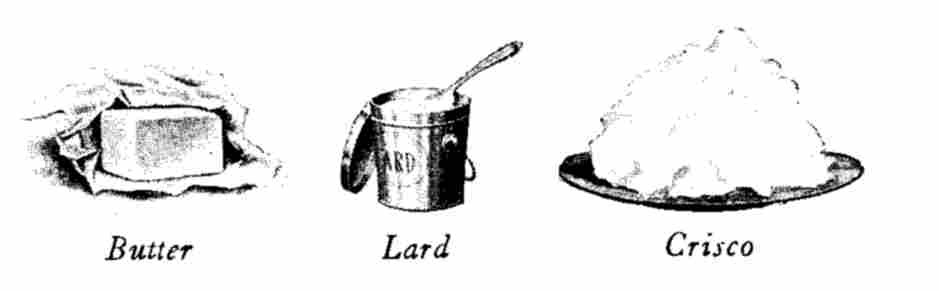
Marion Harris Neil tells us in the Introduction to “The Story of Crisco” (1916, The Procter & Gamble Co., Cincinnati):
‘The word “fat” is one of the most interesting in food chemistry. It is the great energy producer. John C. Olsen, A.M., Ph.D., in his book, “Pure Food,” states that fats furnish half the total energy obtained by human beings from their food. The three primary, solid cooking fats today are butter, lard and Crisco.
The culinary world is revising its entire cook book on account of the advent of Crisco, a new and altogether different cooking fat.’ 1
Indeed, it was the first time cottonseeds, “discarded and deemed a nuisance,” became a foodstuff. 2
‘Many wonder that any product could gain the favor of cooking experts so quickly. A few months after the first package was marketed, practically every grocer of the better class in the United States was supplying women with the new product.
This was largely because four classes of people—housewives—chefs—doctors—dietitians—were glad to be shown a product which at once would make for more digestible foods, more economical foods, and better tasting foods.[italics in original].’
Neil uses novelty, an appeal to status and health claims to help make the appeal wide. Meanwhile, the growing availability of electricity made the market for cottonseed oil as a lamp oil decline, and soon enough, candles were no longer needed. 3
‘The story of Crisco begins innocently enough in pre-Civil-War America when candle maker William Proctor and his brother-in-law, soap-maker James Gamble, joined forces to compete with fourteen other soap and candle makers in Cincinnati, Ohio. P&G entered the shortening business out of necessity. In the 1890s, the meat packing monopoly controlled the price of lard and tallow needed to make candles and soap. P&G took steps to gain control of the cottonseed oil business from farm to factory. By 1905, they owned eight cottonseed mills in Mississippi. In 1907, with the help of German chemist E. C. Kayser, P&G developed the science of hydrogenation. By adding hydrogen atoms to the fatty acid chain, this revolutionary industrial process transformed liquid cottonseed oil into a solid that resembled lard.’4
The recipe book, with its drawing of a pound of butter, pail of lard and plate of large fluffy looking Crisco normalized the product.
‘Meanwhile, in 1924, the American Heart Association was formed. As Nina Teicholz reports in her book, The Big Fat Surprise, it was not the powerful behemoth it is today, but just a collection of heart specialists meeting occasionally to discuss professional matters. In 1948, this sleepy group of cardiologists were transformed by a $1.5 million donation from Proctor & Gamble.’ 5
The whole sad tale of the lipid hypothesis (real food bad, imitation food good) is painstakingly told in “The Oiling of America” by Mary G. Enig, PhD and Sally Fallon (2009). 6 Ancel Keys (Boo! Hiss!) is, of course, featured.
Finally, turn to The Diet Doctor for some straight-forward advice:
‘So how do we know which are healthy fats, and which are unhealthy fats? Unsurprisingly, natural fats, whether they come from animal (meat, dairy) or plant sources (olive, avocado, nut) are generally healthy. Highly processed, industrial seed oils tend to be unhealthy. Let’s face the facts – we ate vegetable oils because they were CHEAP, not because they were healthy. ‘7
———————————-
1. http://www.gutenberg.org/files/13286/13286-h/13286-h.htm
2. “Cinderella of the New South: A History of the Cottonseed Industry, 1855-1955,” by Lynette Boney Wrenn. From https://search.proquest.com/openview/200244cf77466af1beb575b88a39a486/1?pq-origsite=gscholar&cbl=1818773
3. From https://www.westonaprice.org/health-topics/modern-foods/marketing-crisco/
4. From https://www.westonaprice.org/health-topics/modern-foods/the-rise-and-fall-of-crisco/
5. https://www.dietdoctor.com/the-lucrative-story-of-cotton-seed-oil
6.https://pdfs.semanticscholar.org/c929/ad22d48819170127597d26a5e70c38a49021.pdf
7. https://www.dietdoctor.com/the-lucrative-story-of-cotton-seed-oil
Hangry November 9, 2019 Dining out in 1926
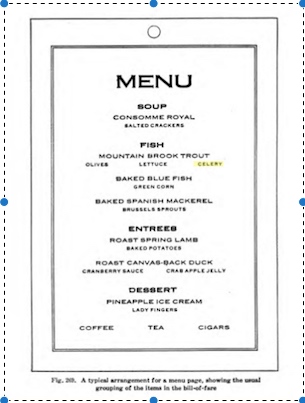
Soup course: Consume Royale
McGavin (2019) tells us “Eierstich,” or royale, is used as a very popular clear soup garnish in Germany. Royale is an egg custard, baked in a water bath and then cut into fancy shapes but most often diamond shaped. This recipe for royale has a few pointers which will guarantee success. Royale is often used in “Hochzeitssuppe” (wedding soup).”
The custard contains cream, eggs, extra egg yolk and butter, so it is a lovely fat bomb. We could skip the salted crackers.
Fish course: Mackerel is high in Omega 3(4,107 mg per Serving) according to Healthline (N.D.). Next in line on the menu is Trout, using a serving size of 3.5 ounces, where Mackerel scores a 2.6 and Trout, 2.0. This is from the good folks at Readers Digest. Canncel (N.D.) tells us about bluefish: “Bluefish, also known as tailor and shad is the only member of the Pomatomidae family. It is found throughout the world but is most common along America’s eastern seaboard. It is an oily fish similar in texture to mackerel with a fatty, soft flesh. It is a good source of niacin, magnesium, omega-3 and potassium.”
But more than the individual fish omega-3 scores, imagine eating fish regularly at dinner! Maybe even daily! At Webmd we get the details: “Omega-3 fatty acids are one of the “good” types of fat. They may help lower the risk of heart disease, depression, dementia, and arthritis. Your body can’t make them. You have to eat them or take supplements.”
The veg: olives, lettuce and celery are good fat/low carbs. Healthline: “Celery is rich in vitamins and minerals with a low glycemic index. You’ll enjoy vitamins A, K, and C, plus minerals like potassium and folate when you eat celery. It’s also low in sodium. Plus, it’s low on the glycemic index, meaning it has a slow, steady effect on your blood sugar.” What is “green corn”? Oh, it’s the “tender ears of young sweet corn, suitable for cooking and eating” (Oxford dictionary). Ok, we’ll skip that — too sugary. Corn has 17.1 grams of carbs for one medium ear, it’s a medium-high in the Glycemic Index. Brussels Sprouts are excellent, according to everydayhealth.com. “Besides being low-carb, these mini cabbages are full of vitamins A, C, folate, and fiber.”
My take on baked potatoes (or mashed) is to counter the starch with equal amounts of fat – full-fat cream, cheddar cheese, butter, sour cream, etc. Bacon bits. Goat cheese.
Entrees: Yikes, are people still hungry after soup and fish and veg? Yes, make room for the lamb or duck. My policy on cranberry sauce or crab apple jelly is to taste it, but avoid gobbling it all up. A nice fatty duck will help fat-bomb the carbs.
Dessert? No. Coffee or tea? Sure. Cigars? Not these days.
The menu demonstrates proper typography and reveals a leisurely, healthful, and probably expensive way to dine out.
References
Canncel, C. (N.D.) How to Cook a Bluefish Fillet. Retrieved from https://www.livestrong.com/article/434671-how-to-cook-a-bluefish-fillet/
Healthline. (N.D.) Retreived from https://www.healthline.com/nutrition/12-omega-3-rich-foods#3
McGavin, J. (2019.) Easy Eierstich (Royale) as a Soup Garnish. Retrieved from https://www.thespruceeats.com/eierstich-recipe-royale-as-soup-garnish-1447340
Readers Digest. (N.D.) Retreived from https://www.rd.com/health/healthy-eating/omega-3-rich-fish/
Polk, Ralph W. (1926.) The Practice of Printing. Retrieved from https://babel.hathitrust.org/cgi/pt?id=wu.89091846634&view=1up&seq=269
Webmed. (N.D.) What You Need to Know About Omega-3s. Retreived from https://www.webmd.com/diet/ss/slideshow-omega-3-health-benefits

Hangry November 2, 2019 Hospital Food
An acquaintance of mine, Dr David Bowering, was appalled at the breakfast he was served at a short stay in the local hospital a few months ago. Looking at the photo he posted, we see OJ at the top right. Might as well serve him a Coke for how much sugar it contains – “natural” or not, that is lot of carbs.
Top left we see two servings of low-fat milk, so containing more “natural” sugars, aka lactose. (Full-fat cream contains no lactose, just lots of yummy nutritious fat. Note to self: that wonderful lemon sauce in the Italian restaurant in Winnipeg in the 1980s can be made at home if you use whipping cream; low-fat milk will curdle it.)
Bottom left, I believe, is oatmeal or porridge, a glutinous mass of white sticky stuff. Not sure. (Not eating it, even with sugar and milk.)
Bottom right is a muffin (refined carbs: flour and sugar) surrounded by an array of white sugar, brown sugar, peanut butter with sugar, jam (sugar) and EE-yew Becel. Here’s Becel’s ingredients: “Canola and sunflower oils 74%, water, modified palm and palm kernel oils 6%, salt, buttermilk powder 1% (milk), natural flavours, lactic acid, vitamin A palmitate (vitamin A), vitamin D3, natural colour, soy lecithin.” (From Becel website.)
Here’s butter’s ingredients (From Wikipedia): “Butter consists of butterfat, milk proteins and water, and often added salt. Most frequently made from cow’s milk, butter can also be manufactured from the milk of other mammals, including sheep, goats, buffalo, and yaks. Fat: 11.52 g Vitamin E: 2% 0.33 mg Vitamin K: 1% 0.99 μg.” Sometimes I go to a meeting at work and realize the only thing I can eat is the butter. His hospital breakfast doesn’t even offer that.
Hangry Pease Porridge Hot
The Art of Cookery, Made Plain and Easy, 1774, describes the procedure for making pease pudding:
To Make a Pease-Pudding
Boil it til it is quite tender, then take it up, untie it, stir in a good piece of butter, a little salt, and a good deal of beaten pepper, then tie it up again, boil it an hour longer, and it will eat fine.
Actually, the full title is The Art of Cookery, Made Plain and Easy: Which Far Exceeds Any Thing of the Kind yet Published, and it was written and published by Hannah Glasse.
To translate: Tie the peas up in a pudding bag, and boil until the peas are tender, then take the bag out of the pot, untie the bag, and add a fairly large piece of butter, a little salt, and a good deal of ground pepper, then tie the bag up and boil again for another hour.
The rhyme makes its first known appearance in Mother Goose’s Melody in 1760:
Pease Porridge hot,
Pease Porridge cold, Pease Porridge in the Pot
Nine days old
Some like it hot, some like it cold.
Some like it in the pot, nine days old.
In peasant cottages there was no kitchen, just one room with the fireplace where they cooked, ate, worked and slept. Their one kettle hung over the fire, or more likely, sat in the ashes.
They made use of every edible item they could find, and just about everything could go into the pot for the evening meal. This included beans, grains, vegetables and sometimes meat, often bacon.
Like split pea soup, pease porridge starts out as dried peas in a pot of water with spices. If other vegetables or meat were on hand then those would go into the kettle, as well.
At night, the kettle would be left hanging over the dying fire. In the morning, the pease porridge was breakfast . . . cold. More water, vegetables — and meat if they were lucky — would be added to stretch it out for the next meal and then the next and so on and so forth.
I like to sing this little ditty to myself in my kitchen at times. I think I remember the clapping: slap knees, clap hands, high fives, clap hands, back to lap, but I would need a friend to practice with for the ending.
The times I sing this are as follows: when I put the delicious expensive nutritious leftover bones the Garbage Soup Bag in the freezer. When I take the GSB out, and put the bones and fat and onion skins and ends of carrots and so forth into my giant roaster, and simmer in water (with a bay leaf!) for an hour or two.
I know the bone broth is done when I tip a teaspoon in to taste and murmur, “Damn, that’s good.” You can feel the vitamins and minerals coursing throughout your bloodstream.
I now eschew water (not enough fat) and most store-bought stocks (too much sugar) when I start a roast or make a sauce. Here, you can be a food snob like me, too, and know that a sauce is thickened by reducing its water content, and a gravy is made by thickening with flour (poison!) or cornstarch (treason!).
The au jus or sauce is delicious, with layers and layers of flavour, including umami – that savory, meaty mmm-yum you can also get from mushrooms.
I cooked at my sister’s house this July in Winnipeg, and by the end of the week her family had been terrorized enough to say, “I know, I know. Don’t throw out the sauce!” Because it would re-appear a day or two later, making the hollandaise a béarnaise, or lending oomph to fresh pork-and-beef meatballs or livening leftovers.
Not nine days old, and not cold, but still.
Hangry January 5, 2020 Obesity and ACEs
My guilty pleasure in times of leisure is watching TV shows at the extremes – Hoarders, Tiny House, My 600-lb Life.
I hadn’t watched 600-lb Life for a while, and recently watched Erica’s Story (https://www.youtube.com/watch?v=9VJHYFQs4d0).
As usual, Erica had an enabler, her niece Jessie. If you are 600-lb plus, it is hard to grocery shop on your own, or, in Erica’s case, to just get out of the house. She hadn’t been shopping for five or six years. Jessie felt bad about buying the chips, cakes, pies, ice cream and sweet rolls, but felt trapped, because Erica would get really upset if she came back without them.
If Jessie were the ideal niece, she would have a lot of resources and spare time, and seek out grass-feed beef and take it to Erica’s and cook it with butter. She would buy and prepare just-ripe avocados and free-range eggs. However, that doesn’t seem realistic. As it was, once a week she would drive to her aunt’s apartment, clean up a bit, get the list, bring the groceries, put them away and go.
Also as usual, Dr Now (https://en.wikipedia.org/wiki/Younan_Nowzaradan) talked about calories (1200 a day), as part of an eat-less move-more strategy. However, for the first time, I saw him refer Erica to a Nutritionist (at 37:45). Erica told the Nutritionist Dr Now told her about the caloric limit, but also spoke about how she was advised to eat “high protein, zero to low carbs, zero to low sugar.” This is the first time I heard macros discussed.
The I-word! The Nutritionist went on to discuss blood sugars, how carbs affect insulin, and how dropping insulin causes hunger. This was also a first.
Dr Now also referred Erica to a Therapist (at 49:34): also new to me. Erica told the Therapist about the horrific sexual assaults she endured at age 16, and said she gained 100 pounds within a year. Her mom arranged for her to have her stomach stapled at age 17 but the “surgery failed,” the staple blew out, and she quickly regained the weight and then a lot more.
Wait, this is sounding familiar.
I stumbled across this when researching ACES – Adverse Childhood Experiences – to try to figure out what the heck happened to my childhood friend. Here it is: “The Adverse Childhood Experiences Study — the largest, most important public health study you never heard of — began in an obesity clinic” (Stevens, 2012).
“It was 1985, and Dr. Vincent Felitti was mystified. The physician, chief of Kaiser Permanente’s revolutionary Department of Preventive Medicine in San Diego, CA, couldn’t figure out why, each year for the last five years, more than half of the people in his obesity clinic dropped out.”
[…]“I had assumed that people who were 400, 500, 600 pounds would be getting heavier and heavier year after year. In 2,000 people, I did not see it once,” says Felitti. When they gained weight, it was abrupt and then they stabilized. If they lost weight, they regained all of it or more over a very short time.”
Deciding to administer a pyschosocial questionnaire, Dr Felitti misspoke. “Instead of asking, “How old were you when you were first sexually active,” I asked, “How much did you weigh when you were first sexually active?’ The patient, a woman, answered, ‘Forty pounds.’”
“He didn’t understand what he was hearing. He misspoke the question again. She gave the same answer, burst into tears and added, “It was when I was four years old, with my father.”
“He suddenly realized what he had asked.
“I remembered thinking, ‘This is only the second incest case I’ve had in 23 years of practice,’ Felitti recalls. ‘I didn’t know what to do with the information. About 10 days later, I ran into the same thing. It was very disturbing. Every other person was providing information about childhood sexual abuse. I thought, ‘This can’t be true. People would know if that were true. Someone would have told me in medical school.’
In a paper, Felitta et al (“Obesity: Problem, Solution, or Both?”) says, “Ultimately, we learned from our patients that in obesity, we are dealing with two core problems: the unconscious, compulsive use of food for its psychoactive benefits [and] the unrecognized and unspoken benefits of obesity.”
“A memorable response comes to mind from 1985 when a patient, going with us through a timeline of her life in which weight, age, and events were matched, told us that at age 23 she was raped and that in the subsequent year she gained 105 lb (48 kg). Looking down at the carpet, she then muttered to herself, “Overweight is overlooked, and that’s the way I need to be.”
The Therapist said to Erica, after hearing about the sexual assaults, “That is not your shame to carry.”
References
Felitti, et al. From https://www.acesconnection.com/fileSendAction/fcType/0/fcOid/473910123817723542/filePointer/473769385973923320/fodoid/473769385973923316/Obesity%20article%20TPJ.pdf
Stevens. From https://acestoohigh.com/2012/10/03/the-adverse-childhood-experiences-study-the-largest-most-important-public-health-study-you-never-heard-of-began-in-an-obesity-clinic/Hangry
 Char Can Cook Keto