Hangry May 10, 2020 Stock up on whole grains and pasta?

Dieticians of Canada (DC) has “Advice for the general public about COVID-19.

“Updated May 5, 2020 – The advice below is reviewed and updated regularly since it’s original publication on March 24. DC is keeping a close watch on new and emerging information. […]

“What can I do to support my immune system?

“A healthy diet rich in fruit and vegetables, protein foods and whole grains is important for a strong immune system as are other healthy lifestyle habits (e.g exercise, not smoking, adequate sleep, managing stress etc). […]

“It is easier on the supply chain if people gradually build up their household stores instead of making large-scale purchases all at once. To do this, you can add a few extra items to your grocery cart every time you shop. Good options are easy-to-prepare foods like:

  • dried pasta and canned sauce
  • prepared canned soups
  • canned or frozen vegetables
  • canned beans (like chickpeas, kidney beans and lentils).”

They also recommend people follow the Canada Food Guide, of course.

Here’s some “new and emerging information,” from Obesity Canada:

“Cardiac, respiratory and metabolic diseases (such as diabetes and hypertension) are more common among patients with obesity. These have been identified as risk factors for more severe disease or death from COVID-19. It is critical that people living with obesity, and especially people with a BMI over 40, take all possible precautions to avoid infection.”

The Globe and Mail says, two days ago: “Obesity may be a risk factor for COVID-19, researchers find. Fat cells may promote inflammation or make it more difficult for infected patients to breathe.”

“Carrying extra fat “stresses the body and makes it harder to do stuff. But we’re learning the fat itself is biochemically active,” said David Kass, a professor of cardiology at Johns Hopkins University School of Medicine.

“Dr. Kass explained the kind of fat that forms in your abdomen produces signalling molecules called cytokines that promote inflammation, part of the body’s immune response. The effect, he said, is like having an intrinsic cellular war constantly going on in the background. An infection of the new coronavirus is like dropping a bomb on top of it all, he said. […]

“Dr. Kass said part of the issue may be mechanical. Having more fat mass in your abdomen can make it harder to move your diaphragm, thus making it harder to breathe. Another potential explanation is that fat cells may act like a depot or reservoir for the new coronavirus, which is known to bind to protein targets called ACE2, he added. These proteins are highly expressed, or deposited, on fat cells, he said.”

Three days ago, the BBC resported:  “Is there evidence obesity is a risk for the virus?

“This question has been the subject of many studies as experts try to work out the answer.

  • In a study of nearly 17,000 hospital patients with Covid-19 in the UK, those who were obese – with a body mass index (BMI) of more than 30 – had a 33% greater risk of dying than those who were not obese.
  • A separate study of NHS electronic health records found a doubling of the risk of dying from Covid-19 among people who were obese. If other health conditions linked to obesity such as heart disease and type 2 diabetes were also taken into account the risk would be even higher, the researchers said.
  • And a study of critically ill patients in UK intensive care units found that nearly 34.5% were overweight, 31.5% were obese and 7% morbidly obese (a total of 73%), compared to 26% with a healthy BMI.”

But go ahead and stock up on “healthy whole grains” (like Hershey’s Kisses cereal with whole grain corn?) and pasta.

References

https://www.bbc.com/news/health-52561757

https://www.dietitians.ca/News/2020/Advice-for-the-general-public-about-COVID-19

https://www.theglobeandmail.com/canada/article-obesity-may-be-a-risk-factor-for-covid-19-researchers-find/?fbclid=IwAR10buk4H3RZHloP_-EJM8A5tNci6OhWC-l-HcYMQXFV3HqLAj9ztAqm00U

and http://obesitycanada.ca/wp-content/uploads/2020/04/Obesity-and-COVID-19-FINAL-april-2.pdf

Hangry May 3 2020. The Newish Normal

1. Cancel Culture. Do you recall, a few months ago, when people were talking about “Cancel Culture,” wherein politically incorrect or controversial speakers were cancelled at North American universities and colleges?  Hello folks, THIS is Cancel Culture, where meetings, conferences, career fairs and K – U in-person classes are cancelled.

2. “Shut Down Canada” was a slogan of Gitxsan Wet’suwet’en and their supporters regarding the pipeline in northern BC way back in January. THIS is how we Shut Down Canada during the COVID-19 virus.

3. It’s raining nicely.

For the past couple of decades, I have made a living promoting and organizing group events.

In the 80s, I specialized in reunions and anniversaries, finding the past Chairpersons of the Manitoba Action Committee on the Status on Women. In the 90s, I promoted and lead workshops for Women in Non-traditional Trades. Later I promoted and taught workshops for Displaced Forestry Workers, then promoted and taught hands-on trades training at Colleges, and recently corralled volunteers for large free dinners at a community centre (that I promoted to gather participants).

Most recently I have promoted, planned, taught and/or attended employment training workshops, inter-agency meetings, service providers gatherings, and small and large career fairs, all cancelled as of March 13, 2020.

I like talking to people, planning the events, designing posters, handing them out in person all over town, leading or attending the events, and writing a report later. All cancelled. Alrighty then.

My hubby has been a private pilot, an airline pilot, airline co-owner, and most recently an airline consultant who provides training and PPCs (Pilot Proficiency Checks) for several airlines. On March 15, he had 3 PPCs booked for three different airlines. All were cancelled March 16 by 11 am.  All those airline staffers laid off, and Transport Canada saying PPCs were extended. Alrighty then.

What was terribly important and needed right away … not so much.

Five years ago, we built an addition onto our house for my MIL, who will be 95 on Monday, so neither of us should really take an essential job.  Anyway, she cannot learn to sneeze into her elbow.

What brings me great pleasure these days is the wildlife. The crow family who raised their chicks in our backyard are back.  (They came back to the area we fed them last year, Mrs and Mr Joe Crow, seeking food where we left the scraps last year) and the Russian Blue feral cat now stands a few feet away (instead of 15) to say, “Hey humans, where’s my kibble?”

And it is raining nicely.

Hangry April 25, 2020 You’re not welcome

Bernard Avishai muses on April 21, 2020 at newyorker.com, “How does one close a town border?”

He was interviewing Nassim Nicholas Taleb (The Black Swan) who said that during a pandemic, “The government should encourage an eclectic array of management norms: drawing up political borders, even down to the level of towns, which can, in an epidemiological emergency, be closed.”

Well, in my sparsely populated corner of northwest BC, you put a sign up on the one road leading to/from the Nass Valley villages: “Nisga’a Locals only” on March 19.

On the coast, “On March 27, the Heiltsuk issued a bylaw banning non-residents and non-Heiltsuk from entering their territory, including Bella Bella, to avoid bringing infection into the community. Essential workers including health-care staff are exempt.

“On Saturday, the First Nation turned away two sailboats en route to Alaska, and have stopped other vessels from docking, said Chief Councillor Marilyn Slett. ‘I know that people are scared and trying to find a place of refuge, and maybe get away from the urban centres, but our community of Bella Bella is highly vulnerable to a COVID-19 outbreak,’ she said.”

On the island, you check every vehicle coming off the ferry to Haida Gwaii, and if they’re not from Skidegate, you tell them to keep moving, don’t stop for groceries or for any other reason. “We want the outside world to know that now is just not a good time to be coming to Haida Gwaii,” Chief councillor Billy Yovanovich told the Black Press Media on April 3. “This is for their safety as well as ours.”

As of April 7, the “Witset First Nation has set up checkpoints outside of the community to monitor who goes in and out. Only members are allowed to enter the community, and they can only leave to go to work or pick up essential supplies.”

April 23, the “Tahltan Central Government (TCG) is asking visitors to stay away from Tahltan territory during COVID-19. […] In a press release issued this morning, the TCG noted its territory’s remote location in the northwestern-most corner of the province, limited healthcare facilities, lack of adequate RCMP resources and large number of elders, makes the people there among the most vulnerable during the ongoing pandemic. The closest hospital from Tahltan Territory is approximately 600 kms away.”

Being at the end of a very long road or on an island with limited resources is one reason to “close a town border” but memory is another.

Heiltsuk elder Pauline Waterfall, 76, “said her mother heard stories from her grandmother about the Spanish flu, and how so many people died each day that proper burials couldn’t be done. She described this time as utter chaos, confusion, panic and fear”.

And here: https://www.terracestandard.com/news/petition-calls-government-to-restrict-non-essential-travel-to-b-c-s-north-central-coasts/ and https://www.terracestandard.com/news/kitselas-villages-closed-to-visitors/

And https://www.terracestandard.com/news/skeena-bulkley-valley-mp-calling-for-halt-on-sport-fishing-licenses-to-out-of-province-fishers/

With tourist attractions such as recreational fishing, hot springs, museums and festivals limited, closed or cancelled, the local newspaper is suffering. Instead of paying for ads promoting events to experience and places to go and things to see, my neighbours are putting out press releases asking people to please stay away.

References

Avishi, B. (April 21, 2020.) “The Pandemic Isn’t a Black Swan but a Portent of a More Fragile Global System.” From https://www.newyorker.com/news/daily-comment/the-pandemic-isnt-a-black-swan-but-a-portent-of-a-more-fragile-global-system

Balcerzak, N. (March 19, 2020.) “NLG activates Nisga’a Emergency Program Act in response to COVID-19, discourages visitation from non-locals.” Nass Valley closes to visitors, hot springs shut down.

From https://www.terracestandard.com/news/nass-valley-hot-springs-close-as-nlg-activates-the-nisgaa-emergency-program-act-in-response-to-covid-19/

Barker, T. (April 23, 2020.) “Tahltan ask visitors to stay away from their territory during COVID-19.”Both Red Chris and Brucejack mines continue to operate under strict pandemic measures. From https://www.terracestandard.com/news/tahltan-ask-visitors-to-stay-away-from-their-territory-during-covid-19-2/

Boutiliera, M. (April 21, 2020.) “Help The Terrace Standard continue its mission to provide trusted local news.” Trusted, local Terrace news? It’s now up to you. From https://www.terracestandard.com/news/help-the-terrace-standard-continue-its-mission-to-provide-trusted-local-news/.

CBC News British Columbia. (April 7, 2020.) “Indigenous communities impose curfews, set up checkpoints to keep out COVID-19.”Leaders concerned outsiders will bring virus into communities. From https://www.cbc.ca/news/canada/british-columbia/indigenous-curfews-checkpoints-1.5525078

Gall, K. (April 3, 2020.) “ ‘Drive right through’: Haida Gwaii First Nation erects checkpoint for non-residents.”Skidegate Band Council Emergency Operations Centre erected checkpoint on April 2. From https://www.terracestandard.com/news/drive-right-through-haida-gwaii-first-nation-erects-checkpoint-for-non-residents/

Hewitt, T. (April 3, 2020) “Skeena Bulkley Valley MP calling for halt on sport fishing licenses to out-of-province fishers.” Bachrach and Courtenay-Alberni MP Gord Johns co-signed the letter to the Minister of Fisheries.

From https://www.terracestandard.com/news/skeena-bulkley-valley-mp-calling-for-halt-on-sport-fishing-licenses-to-out-of-province-fishers/

Johnson, L. (April 6, 2020.) “This is not the time’: Heiltsuk Nation tells yachters they can’t visit during COVID-19 pandemic.

From  https://www.cbc.ca/news/canada/british-columbia/heiltsuk-coronavirus-bylaw-travel-restriction-1.5522569

Hangry April 18 2020 Science and pandemic dough

Michelle Ghoussoub (2020) posted for CBC news on April 5 about sourdough in the pandemic . “[Karen] Bates said she noticed the trend when she, one day into her own quarantine, baked a loaf of sourdough and went to post it on Twitter — only to discover dozens of people had already done the same.”

“Bates, who is working on a master’s degree at Royal Roads University in environmental education, and studies the relationship between traditional skills and resilience, says we might be witnessing ‘a real time immersion in how we feel about food during economic transitions.’

“There seems to be a shared cultural value around cooking, baking that is coming out now — it’s normally sort of buried in our busy economic industrial society,” she said.

“And then there’s that survival aspect —we realize we’re not masters of this earth, there’s this little virus that can take us all down, and how do we reconnect with being part of natural living systems? Cooking is one of those things that connect us to natural living systems. Food is one of those things that connects us to the earth.”

Becky Robertson posted on April 13, quoting a restaurant co-owner who bakes sourdough products. “Evelyn Neves thinks that there are is a slew of reasons people are turning to breadmaking during this difficult time.

“Our first thought is that it must have been something a lot of people have always wanted to try and now they have the time to try it,” Neves says. “Bread is a humble product that has held a place on the table in almost all of our lives, no matter who we are or what culture we come from.”

“She also thinks that the need for the starter to be “fed” daily may even offer some people a sense of structure, as well as a feeling of being prepared amid a pandemic.

‘Perhaps in this time where people are living somewhat unscheduled yet limited lives, they are finding a calm in knowing they have something to check on and a task to accomplish,’ she says.”

Give us this day our daily bread, was, by necessity, sourdough and only sourdough and always sourdough, as dry active yeast was not available until the 1940s, according to bakerybits.co.uk (2019).

Gluten intolerance and celiac disease are on the rise (pun intended).

Derek Beres (2016) quotes Michael Pollan who blames “the dangers of manufactured yeast. […] Instead of relying on undependable elements like air, temperature, and time, companies wanted insurance that the bread was going to be edible. Enter a chain of emulsifiers and a specific yeast: Saccharomyces cerevisiae, which, as Pollan writes, is “linear, mechanical, and predictable.”

“All whole grains contain phytic acid, which locks up minerals not only in the bread but, if you eat enough of it, in the body of the bread eater as well. One of the advantages of a long sourdough fermentation is that it breaks down the phytic acid, freeing up those minerals. It also makes the gluten proteins more digestible and slows the body’s absorption of starch.”

Bfreefoods.com (ND) tells us some of the reasons sourdough is beneficial.  “Sourdough contains the bacteria ‘lactobacillus’ which produces lactic acid, which aids digestion. When bacteria interacts with yeast, it works to pre-digest the starches in the grains. Pre-digestion by sourdough means less bloating and less digestive discomfort.

“The lactic acid found in sourdough bread improved the growth of healthy gut bacteria which gives your immune system a boost. Did you know that 80% of your immune system is found in your gut?”

Marco Gobbetti et al (2019) are confident that sourdough’s “potential to lower glycemic index, increase mineral bioavailability and decrease the gluten content have been proven almost definitively,  [while] others potentialities are emerging, which deserve novel insights. [These include] salt reduction in baked goods, management of irritable bowel syndrome (IBS), and the synthesis/release of bioactive compounds.”

Leidiane, A. et al (2018) explain the long fermentation: “Overall, all the fermentable carbohydrates (sucrose, maltose, glucose, and fructose) are quickly depleted during the first hours of fermentation, whereas carbohydrates with a higher degree of polymerization (such as fructans) are used later. This leads to hypothesize that long fermentation, such as that typically relying on sourdough, can provide a more pronounced degradation of FODMAPs.”

Hubby’s sourdough has been rising for about 24 hours. Our house is going to smell all shelter in place this afternoon.

References

Bakerybits.co.uk. (2019.) From https://www.bakerybits.co.uk/resources/a-look-at-the-history-of-yeast/

Beres, D. (2016.) “The Real Problem With Gluten: Time” From https://bigthink.com/21st-century-spirituality/the-real-problem-with-gluten-time?utm_medium=Social&facebook=1&utm_source=Facebook&fbclid=IwAR3owJ5itwDMcNhmNO7Q_pGEuzGccHvNopAp52eLISQOo2S6r8HRmGMH9Ec#Echobox=1586800921

Bfreefoods.com (ND.) “Top Benefits of Eating Sourdough Bread.” From https://www.bfreefoods.com/en/the-benefits-of-sourdough-us/?fbclid=IwAR0L-YWnpYRVG0yvDLhzrvS5H_2np3VDQMVObCwNBMJWnjjeilp-r_4rrOs

Ghoussoub, M. (2020.) “Here’s why everyone you know is baking bread in quarantine.” From https://www.cbc.ca/news/canada/british-columbia/here-s-why-everyone-you-know-is-baking-bread-in-quarantine-1.5518248

Gobbetti, M. (2019.) “Novel Insights on the Functional/Nutritional Features of the Sourdough Fermentation.” From https://www.sciencedirect.com/science/article/abs/pii/S0168160518302770

Leidiane, A. (2018.) “Effects of Sourdough on FODMAPs in Bread and Potential Outcomes on Irritable Bowel Syndrome Patients and Healthy Subjects.”

 From https://www.ncbi.nlm.nih.gov/pmc/articles/PMC6110937/

Robertson, B. (2020.) “Sourdough bread starter is all the rage in kitchens across Canada right now.” From https://www.freshdaily.ca/food/2020/04/sourdough-bread-starter-all-rage-kitchens-across-canada-right-now/

Recipe here:

https://www.capenews.net/falmouth/columns/give-sourdough-a-try-while-sheltering/article_149f0082-35d8-50ed-a03e-1d44a8c891fe.html

Hangry April 12, 2020 Spying in the age of Shelter in Place

The website imdb.com gives us the synopsis of Rear Window (1954). “Professional photographer L.B. “Jeff” Jefferies breaks his leg while getting an action shot at an auto race. Confined to his New York apartment, he spends his time looking out of the rear window observing the neighbors. He begins to suspect that a man across the courtyard may have murdered his wife. Jeff enlists the help of his high society fashion-consultant girlfriend Lisa Freemont and his visiting nurse Stella to investigate.”

It was hot weather: one couple slept outside on their balcony, a young woman sunbathes in the rear courtyard, a cute little dog is lowered in a basket on a rope.

Now that it has warmed up here, I see the across-the-street neighbours visiting with their daughter and granddaughters six feet away. The backdoor neighbour is painting an elaborate wooden headboard, or maybe it’s a shelf – I don’t have Jeff’s arsenal of long-distance lenses, so I can’t be sure. On our walks in the quiet streets we look judgmentally at a half-dozen cars parked at a small house. “Alberta license plate,” hubby comments, to which I reply with a stern, annoyed Marge Simpson “Hrrrm.”

A friendly guy named Steve doing yard work warns a neighbour kid to get out of the tree –- the owner is driving up. A neighbour whose hours of work have been halved is selling his Subaru — $43,000 and equipped with a 5,000 pound tow-bar, not that anyone is going camping anytime soon.

A toddler who is accustomed with visiting with his grandparents through the front window gleefully bangs on the back window when he sees me, and keeps going until I stop what I’m doing and wave. It is normal to see one woman in a car with an open window in the driveway, and another sitting on a lawnchair six feet away.

A person who is trying to de-thatch his front yard (way too early in the season) starts up a conversation, and we suspect he lives alone and just needs to talk to some people. Probably wants to get some Vitamin D, like we do. Young women prefer back porches for scrolling endlessly on their phones.

More to come, I’m afraid. Will update as I learn more.

https://www.imdb.com/title/tt0047396/

Hangry April 6, 2020 Feeding the wildlife

Part 1: What my crows like

I have a backyard flock, which is allowed, but usually around here they are chickens. I believe it is allowed to have two or three egg-layers, and people are trying to get rid of the roosters who crow contrary to the bylaws.

My free tree, a red maple, was large enough to attract squirrels a few years ago, as they could jump from across the street, where the mother maple lived.  But this year we got a family of crows.

Instead of scolding squirrels telling us to get out of their territory, this spring we got a family of four babies and two adult crows.  They talk to us as well. The parents say, “Caw, caw, caw, Wup!”

So I started saying “Wup!” in response.  Hubby went in to get his camera, and the parents and I were exchanging “Wups”” when he came back out. “Are you talking to them now?” he asked, and I said “Wup!”

Our city also has a new recycling protocol, where you divide garbage into cardboard/hard plastic, organics, and other. I decided to give the crow family the first go at the organics, in a place where our yard was denuded due to a recent renovation. A blank slate, no grass growing.

They like meat: ham, steak, chicken (no bones).  They do not like kale, red cabbage, or peas.  They like BBQd steak and baked potatoes with sour cream.

I had always wondered why crows jumped up to our eavestrough to look for food. Hubby said, “Maybe they are eating worms they dropped earlier.” That seemed unlikely to me.

The first time I left some yummy meat for my backyard flock, I saw a parent chase away the kids, then bring the food up to my neighbour’s new backyard evestrough and call the kids up to the roof to eat. Using it as a bowl, and safe.

The kids showed their red throats, Wup.

Part 2: The free tree

Late in summer, the free tree, which is growing beside/through the back fence grew large enough to buckle the fence and left a small gap, maybe four inches wide.

Part 3: The Russian Blue

In the fall, I kept feeding the crow family as I saw other crows nearby. Hubby and I had not seen them in the yard for a while. I Googled “crows, northwest BC” and saw that we live right on the border where some crows migrate and others overwinter.

Then one evening I saw a cat’s glowing eyes at the crow feast location. After the first snow, we could see the cat footprints were coming from the gap in the fence. It got cold, and I set up a cat carrier with blankets, then moved it to under the shed roof, then into a sheltered spot right beside the house.

Google to the rescue when I asked for “outdoor chicken warmer;” an image of a happy rabbit sitting on a warming pad appeared.

We set up a motion-activated trail cam and saw Outdoor Cat (aka Blue) resting on the warming pad, playing with the toy mouse on a string, and drinking from the outdoor heated watering bowl. And eating.

At first, fifteen feet was as close as Outdoor Cat could tolerate before streaking off.  As spring approached, he would get as close as five feet to glare at us if the bowl was empty. I think he knew the squeaky sound of the back door meant the food-providers were nearby. Sometimes he would appear three times a day, other times only once in three days.

Our trail cam then showed us Outdoor Cat, Dusty (our cat) a Stripey cat (WHO IS THAT?) and then not one but three different tuxedo (black and white cats) visiting.  All right, we will only put a small amount out after he shows himself to us, and that is working well.

A few days ago, walking through our deserted neighbourhood, we saw him two blocks away, slinking from one back yard to another, across the quiet street. “Where is your other house?” we demanded to know, but he vanished into the shrubbery.

Hangry March 29, 2020 Pass the zweibach

Wesley Peters writes in the March 27, 2020 issue of Steinbach Online: “A former microbiologist and Steinbach resident, Dr. Glen Klassen, conducted research on the pandemic back in 2008 at the Canadian Mennonite University in Winnipeg. […] What he found, he says, was startling. ‘The death rates for Mennonites were pretty well double the death rates of non-Mennonites.’

“Klassen goes on to explain how some of the different socializing patterns Mennonites engaged in potentially played a role in those disproportionate numbers. ‘If you were in a French Catholic parish, you would probably go to the same church every Sunday and meet the same people. The Mennonites were different. They had a moveable church service. One week it would be in Kleefeld, and the next week it would be in Blumenort.’

“Mennonites were not only meeting for church services says Klassen, but also socializing at pig slaughter parties and faspa. ‘I haven’t proven this, but it’s my hunch that this kind of accelerated order of extreme socializing had something to do with it’.”

If you read my blog post “Play with your food,” you would be familiar with pig slaughter parties:

“Of all the cast-off parts, I loved the bladder best. My mother washed it off in clean water, tied off the ureter with a double knot, and tossed it to me. […] Kid to kid, we hurled the bladder as hard as we could huck it, in hopes it would splatter and spill its pee on someone. No luck.”

“That’s from Carla Funk’s story ‘Butchering Day,’ or, in Low German, Schwein schlachter. Before the pigs’ heads were simmered, the “eyeballs had already been cut out and given to us to play with, our fingers working the stiffened lids and long lashes to make them blink like our own eyes.”

“If you had land just outside of town, with room for a logging truck and a garage and shed or two, why wouldn’t you raise pigs? Grandparents, bachelor uncles, extended family and children came together one Saturday every fall, using every bit of the animal possible. Shot, scalded, scraped, organ meats inspected, then the pig was  broken down into chops, roasts, ham and ribs. Boiled heads were for headcheese, Grandma using her sharpened paring knife to get “every scrap and shred of flesh and fat, […] every edible fleck found on that cooked skull.  She’d mix the meat together with some of the hocks, adding salt, pepper, and spices, then let it set in pans like a jelly until firm and ready to slice.”

Now, Faspa:  John Loghurst wrote in the Winnipeg Free Press on March 27, 2020 quoting Klassen. “Added to this was the “constant visiting between relatives from many locales,” such as Sunday faspa, a late afternoon lunch and visit held after church in various homes. They were ‘promiscuous in their socializing,” Klassen said of how the desire to maintain community contributed to the spread of the flu virus’.”

The Mennonite Heritage Cookbook (2007) explains: “Faspa meant the gathering of family and friends, usually at 4 p.m. Sunday, for a light meal and fellowship, with an emphasis on fellowship.  The meal always included zwieback, coffee and might also include cheese, cold cuts, and jelly.” Finger foods. Pass the zweibach.

The Taste of Home website says, “When Mother baked zweiback rolls—which means “twice baked”—she’d guard them, lest they disappear quickly! She would bake them on Sundays when friends came by for ‘faspa,’ a meal of cold meat, cheese, jelly and coffee.”

These are my peeps.  They travelled to East Reserve, Rural Municipality of Hanover (now Steinbach, Manitoba) in 1874, from Prussia/Russia because they were promised religious freedom, to be allowed to teach their children and hold church services in Low German, build their houses or house barns in a many-streeted village, with a shared pasture across the main road.  But the Great War made governments nervous about newcomers speaking “enemy” languages.

Vanessa Quiring writes in her master’s thesis about the broader cultural forces: “Government regulations created hesitancy and wariness amongst the Mennonites in matters related to public health. Government press censorship, conflict over education and schooling, the appointment of health officers and bans on meetings and church services all created tension, and arguably contributed to the distinctly higher mortality rate amongst the Mennonites of Hanover.”

The local newspaper was forced to switch to English, which a third of the population couldn’t read. There were few trained medical practitioners, with midwives also acting as traditional remedy dispensers and as undertakers, travelling from village to village, house to house, dead, ill and well.  Attending funerals in large numbers. Care for the ailing depended on family, neighbours, and community, including the church.

I am very glad my relatives were shunned from the church in 1898, and we became urban entrepreneurs and tradespeople, not church-going farmers.

References

Longhurst, J. (2020.) “Century-old lessons echo for retired scientist.”From https://www.winnipegfreepress.com/special/coronavirus/century-old-lessons-echo-for-retired-scientist-569152512.html

Mennonite Heritage Museum cookbook “From Pluma Moos to Pie.” 1st edition 1981 and revised in 2007 at https://www.goesselmuseum.com/what-is-faspa-

Peters, W. (2020.) “Why Mennonite Death Rate Was Double Average During Spanish Flu.” From https://steinbachonline.com/local/why-mennonite-death-rate-was-double-average-during-spanish-flu?fbclid=IwAR0THqWTH1n0QtNbJU5xQZl1lnCNKIEHMsiDHUW0hq4TbsSzQYdown6gVpY#.Xn6q2nDDoPE.facebook

Taste of home. (n.d.) Recipe here: https://www.tasteofhome.com/recipes/grandma-s-zwieback-rolls/

Toews, C. “Hangry February 21, 2020. Play with your food.” At https://charcancookketo.food.blog/2020/02/17/hangry-february-16-2020-play-with-your-food/

Quiring, V. (2015.) “Mennonites, community and disease: Mennonite Diaspora and responses to the 1918- 1920 influenza in Hanover, Manitoba.” At https://mspace.lib.umanitoba.ca/bitstream/handle/1993/30724/quiring_vanessa.pdf?sequence=1

Hangry March 21, 2020 How we hoard here

On the day Trump got elected, my hubby started a Trump Box and gradually filled up our cellar with bottled water and canned goods. Now that COVID-19 is scaring us here in my northern town, we see that Toilet Paper is the mainstay of Panic Shoppers.

The following are excerpts from social media.

March 14

Terrace succumbing to media induced panic buying. Ridiculous! TP and Rice, what else ya’ll going to hoard?

March 15

My husband and I are Elders and we were out shopping at Wholesale on Saturday afternoon, it was sad to see the empty shelves. What made us feel even sadder was seniors coming in with their baskets, looking around, stuff they needed were gone. Felt so bad for them, putting their baskets back and walking out of the store. Please people take what you need and leave the rest!

March 16

Went to buy flour but it was all gone!

Yup pasta and rice were gone.

March 18

It’s not a good thing when half of us can’t get toilet paper, rice, noodles, flour, hand sanitizer, basic things because people are hoarding them! I can’t find toilet paper everyday and soon I won’t have any!

March 19

Just a warning to those families expecting to do a huge shop as you normally do on child tax day, like myself and haven’t been able to, specific food like meat, potatoes, boxed pizza etc., is now being limited to 1 item per person Save on had started it and most likely all stores will follow suit. We know why this is happening now.

Fam of ten here I have 8 kids and I’m having a hard time getting meats when I go check stores all the meats are gone I’m just praying for a miracle right now this sux but trying keep my chin up n believe this will pass quickly.

Just came from Safeway. Low on fresh produce like potatoes, cabbage, carrots, head lettuce, onions, lemons, salad fixings. But lots of TP. And low on bread

March 20

Save on foods, lil meat left n there’s no eggs left other then those small lil ones in the corner.

The meat guy told me I had to put one of my chicken packs back, when all I had was 1 pk chicken thighs, 2 pk chicken breasts. He said we are only allowed one of each. First time I’m able to get anything. Shelves were so bare. Superstore meats was wiped right out too.

I went for my normal every 4 month grocery shop. I live out of town and only do a mega shop every few months. I only got a few things as i did not want to be seen as “that” person … even then i felt like a person hoarding … could not get any meat as the place was cleaned out and the only pack of meat on the shelf was $50 for 2 steaks !!!!!

I went to Walmart last night and at that time the only areas wiped out were meats, potatoes were gone and canned goods were low. I was surprised to see the milk section full and the freezer sections had quite a bit left. Lots of sandwich meats , hot dogs and bacon. And the funniest thing to me was how full the produce section was when healthy foods is what we should be eating right now!!

Go first thing in the morning when everything is freshly stocked. Otherwise the meat section and I think bread runs out. And toilet paper, but fresh fruits and vegetables are full up and most other section. Might have to look for stuff like potatoes, but trucks are always coming in. Check Superstore too.

They are doing a great job at restocking at Wholesale. We went tonight at 6pm and we got everything we needed except toilet paper, rice and diapers.

I tried to get yeast to use my bread maker couldn’t find any, yet another lady had 4 jars in her cart. I would have only taken 1, no matter what…

March 21, 2020

It took me 4 days to find flour.

I load up monthly for household of 7 sometimes 9 and yesterday was just awful shopping couldn’t get usual stuff needed.

(The photo is from a local supermarket this afternoon – no paper towels, no TP.)

Hangry March 14, 2020 No hammer stone required

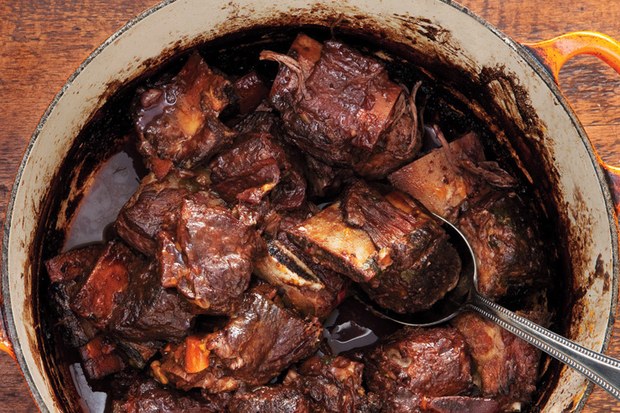
Simmering and braising bone-in short ribs in bone broth feeds your expensive brain, helps maintain insulin sensitivity, and you don’t need a hammer stone to get at the bone marrow.

Jess Thompson talks about Pliocene-era “Lucy” and argues that Lucy was not wanting meat, but wanting fat, specifically marrow bone. (Using a hammer stone to smash bone marrow, not a flake stone to cut meat.) A pounding tool to get at the good stuff, to smash open marrow.

The University of Chicago Press headlines their press release about the study: “Humans may have emerged from scavenging big game, eating brains and marrow.”

“In ‘Origins of the human predatory pattern: The transition to large animal exploitation by early hominins,’ published in the February 2019 issue of Current Anthropology, Jessica C. Thompson, Susana Carvalho, Curtis W. Marean, and Zeresenay Alemseged challenge the longstanding paradigm in anthropology that stone tools and meat-eating directly preceded the emergence of humans, arguing that our existence may instead be owed to our earlier ancestors consuming brains and marrow as they scavenged big game.

“We offer a new and testable hypothesis that simple hammering tools sparked our involvement with large-bodied prey more than 3.2 million years ago – by unlocking the fat stored within their bones,” Thompson writes.”
[…]
“Drawing from the most up-to-date archaeological data as well as chimpanzee ecology, Thompson and her co-authors offer a new theory about big game consumption among humans’ closest ancestors. They propose that their earliest encounters eating large game were not reliant on knife-like “flake stone” tools, nor were they eating much, or any, meat off bones. Instead, they consumed large animals as scavengers of the parts other scavengers couldn’t easily access, eating inside-bone nutrients — marrow and brains — by breaking through bones with percussive tools.

“Large animals, with their easily digestible and calorically rich fat and protein, are thought to have been partly responsible for humans evolving larger brains and bodies than other primates. Brains and marrow are the fattiest body parts on lean wild game and are the precursor to fatty acids important to eye and brain development. This is an important factor, Thompson writes, when weighing the costs and benefits of meat-eating versus inside-bone eating in East Africa 3.5 million years ago. She also notes that inside-bone nutrients take much longer than outside-bone nutrients do to rot. “This undoubtedly extended the amount of time it persisted in a fresh state, thus increasing encounter rates relative to edible flesh and decreasing risk from carnivores that remain near fresher kills,” she writes.”

The University of Michigan Health System says, “Bone marrow fat tissue secretes hormone that helps body stay healthy.”

“It has been known for its flavorful addition to soups and as a delicacy for dogs but bone marrow fat may also have untapped health benefits, new research finds. Researchers find that with calorie restriction, a less-studied fat tissue releases adiponectin, which is linked to reduced risk of diseases like diabetes.
[…]
“A University of Michigan-led study shows that the fat tissue in bone marrow is a significant source of the hormone adiponectin, which helps maintain insulin sensitivity, break down fat, and has been linked to decreased risk of cardiovascular disease, diabetes, and obesity-associated cancers. The findings appear in today’s online-ahead-of-print issue of Cell Metabolism.”

References
The University of Chicago Press. (2019.) From

Thompson, J. (2019.) “Fat of the land: What ancient bones tell us about the origin of the human diet | Jess Thompson ASU Jan 18, 2019
From https://www.youtube.com/watch?v=iSCV_XFcVPU

University of Michigan Health System. (2014.) From From https://www.sciencedaily.com/releases/2014/07/140703125216.htm

Recipe

I’ve adapted a recipe from https://www.epicurious.com/recipes/food/views/red-wine-braised-shortribs-367736

Red Wine-Braised Short Ribs / Christopher Testani

YIELD Makes 6 servings

INGREDIENTS

5 pound bone-in beef short ribs, cut crosswise into 2″ pieces
Kosher salt and freshly ground black pepper
3 tablespoons vegetable oil [make it olive oil, tallow or lard]
3 medium onions, chopped [I used half an onion]
3 medium carrots, peeled, chopped [I used 1.5 carrots]
2 celery stalks, chopped [I used one]
3 tablespoons all-purpose flour [not needed, don’t use it]
1 tablespoon tomato paste
1 750-milliliter bottle dry red wine (preferably Cabernet Sauvignon) [save a glass for yourself!]
10 sprigs flat-leaf parsley
8 sprigs thyme
4 sprigs oregano
2 sprigs rosemary
2 fresh or dried bay leaves
1 head of garlic, halved crosswise
[I didn’t use herbs, it’s flavourful enough with out them]
4 cups low-salt beef stock [use home-made or store-bought bone broth instead]

PREPARATION

Preheat oven to 350°F. Season short ribs with salt and pepper. Heat oil in a large Dutch oven over medium-high heat. Working in 2 batches, brown short ribs on all sides, about 8 minutes per batch. Transfer short ribs to a plate. Pour off all but 3 tablespoons drippings from pot. [no, don’t pour off healthy fats that keep your insulin sensitive]

Add onions, carrots, and celery to pot and cook over medium-high heat, stirring often, until onions are browned, about 5 minutes. Add flour [no flour, it’s yucky] and tomato paste; cook, stirring constantly, until well combined and deep red, 2-3 minutes. Stir in wine, then add short ribs with any accumulated juices. Bring to a boil; lower heat to medium and simmer until wine is reduced by half, about 25 minutes. Add all herbs to pot along with garlic. Stir in stock. Bring to a boil, cover, and transfer to oven.

Cook until short ribs are tender, 2-2 1/2 hours. Transfer short ribs to a platter. Strain sauce from pot into a measuring cup. Spoon fat from surface of sauce and discard [do not discard brain-building fats!]; season sauce to taste with salt and pepper. Serve in shallow bowls over mashed potatoes [no spuds required] with sauce spooned over.

Cooks’ note:
To test if the ribs are done, pull on a bone. It should slide out freely.

Hangry March 7, 2020 Healthy soils

This weekend I taped an episode of Char Can Cook Keto on Thimbleberry Farm, talking to Young Agrarians who care about keeping nutrients in the soil and growing sustainably.

Serious and well-informed, Vicky explained her small farm’s technique of no-till agriculture. For one, they don’t need to use petroleum products to fill a motorized tiller’s gas tank. Tilling also brings the weed seeds up into the sunlight instead leaving them dormant under a layer of mulch – she and her husband Chris plant cover crops of peas or oats, which die out over the winter and provide a nice protective cover.

A website called notillagriculture.com tells us about the benefits.

Less Soil Compaction With No Till Farming

Conventional tillage breaks up the natural soil structure, which makes it more vulnerable to soil compaction.

Less Soil Erosion With No Till Farming

In general, with no till farming, there’s less soil erosion caused by wind and water. Leaving a thick layer of mulch cover (stalks, straw, leaves, chaff, and pods) on the surface of the soil can also help prevent soil erosion.

Less Soil Moisture Loss With No Till Farming

That same mulch cover, or plant residue, helps keep the soil moist and protects against evaporation caused by wind and sun. Less moisture loss means less water usage.

Healthier Soil With No Till Farming

With no till farming, because the fields aren’t tilled, the plant residue that’s left on top of the soil decomposes naturally, increasing life forms and organic matter. Overall, no till farming creates a healthier field ecology.

More Productive Soil With No Till Farming

Bottom line: Healthier fields and healthier soils mean more productive soils, which lead to higher crop yields.

Prof. Helias A. Udo de Haes et al look at nutrient deficiencies: “In total, 21 mineral nutrients are essential for the health of crops, livestock and humans.” Humans and livestock don’t need Boron, but we do need Nitrogen, Potassium, Calcium, Magnesium, Iron and  Zinc, among others.”

We need Zinc: “Zinc plays an important role, especially in protein synthesis. Zinc deficiency causes problems such as growth disorders, delayed sexual development, increased susceptibility to infection, immune suppression, skin rashes and chronic diarrhoea. […] The geographical distribution of zinc deficiencies in humans shows roughly the same spatial pattern as zinc deficiency in the soil.”

We need Selenium: “There are indications that selenium deficiency exacerbates other disorders such as iodine deficiency diseases, cancer and cardiovascular disease, fertility problems, viral diseases (including HIV), muscular dystrophy, and – with 30% of women – insufficient selenium in milk during breast- feeding. […] A clear relationship has been ascertained between selenium deficiency in the human body and selenium deficiency in the soil.”

We love fungi: “Mycorrhizas are soil fungi that form a relationship with the roots of higher plant species, including agricultural crops. These fungi can make otherwise inaccessible or scarce nutrients and water available to plants in exchange for sugars (mutualism). This is possible because the mycelia of the fungi are in contact with a much larger soil volume than the plant roots themselves and because they can absorb forms of nutrients that cannot be taken up directly by plants. Mycorrhizas also improve soil structure and disease resistance. For most agricultural crops, mycorrhizas contribute to increased yields, increased nutrient efficiency and reduced use of pesticides. […] High fertilisation levels often restrict their activity.”

Healthy soils, healthy plants, healthy humans.

References

De Has, H. (2012.) “Scarcity of micronutrients in soil, feed, food, and mineral reserves.” From https://www.iatp.org/sites/default/files/scarcity_of_micronutrients.pdf

Notillagriculture.com (n.d.) “Effects Of No Till Farming On Soil.” From https://notillagriculture.com/no-till-farming-effects-on-soil/

ABOUT THIMBLEBERRY FARM

Thimbleberry Farm is located in Terrace, BC. Established in 2016, owners and operators Vicky and Chris manage a market garden, pastured poultry, layer flock, and meat rabbits. As a no-till, no-pesticide/herbicide farm, Vicky and Chris integrate the farm’s different operations to create a healthy and diverse agro-ecosystem that produces nutritious, ethically grown food for their community.

Vicky and Chris practice small-scale, intensive farming. They would like to show people that a lot of food can be produced on a small acreage using little mechanization. They feel their operation is an example of a very accessible way to farm.

From https://youngagrarians.org/skeena-bulkley-farmers-meet/

Design a site like this with WordPress.com
Get started